MARINO PH
Your Maritime Digital Hub

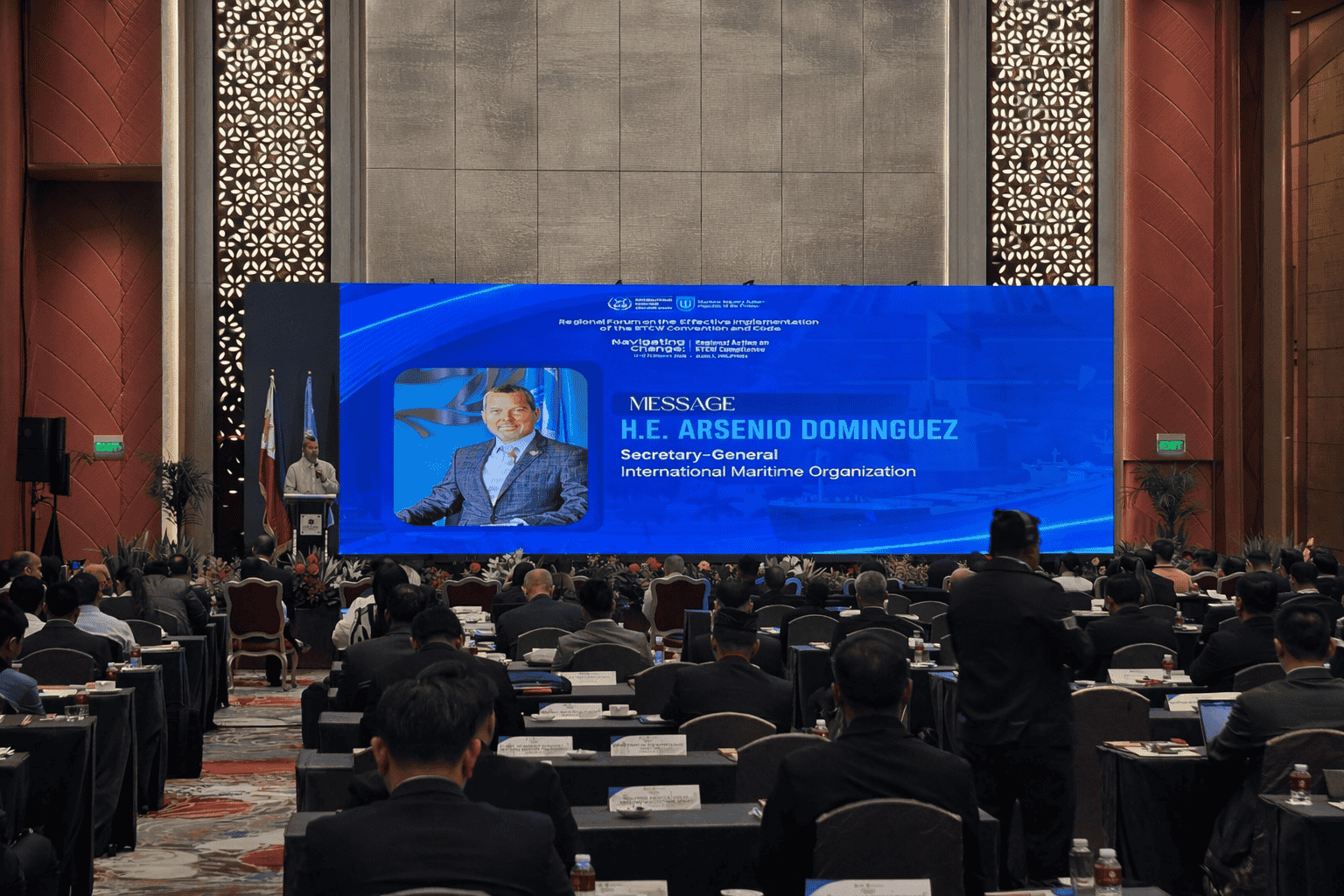
Paranaque City, Philippines The Regional Forum on the Effective Implementation of the STCW Convention and Code was held in Manila, graced by Arsenio Dominguez, Secretary-General of the International Maritime Organization (IMO), bringing together maritime leaders and stakeholders from across the region to advance discussions on the future of global seafarer training standards.
During the high-level gathering, the IMO confirmed that Phase 2 of the comprehensive review of the STCW Convention will begin in the coming weeks. The next stage of the review will focus on specific amendments to ensure the Convention remains responsive to the accelerating transformation of the maritime sector particularly in areas such as decarbonization, artificial intelligence, automation, and expanded digital systems onboard ships.
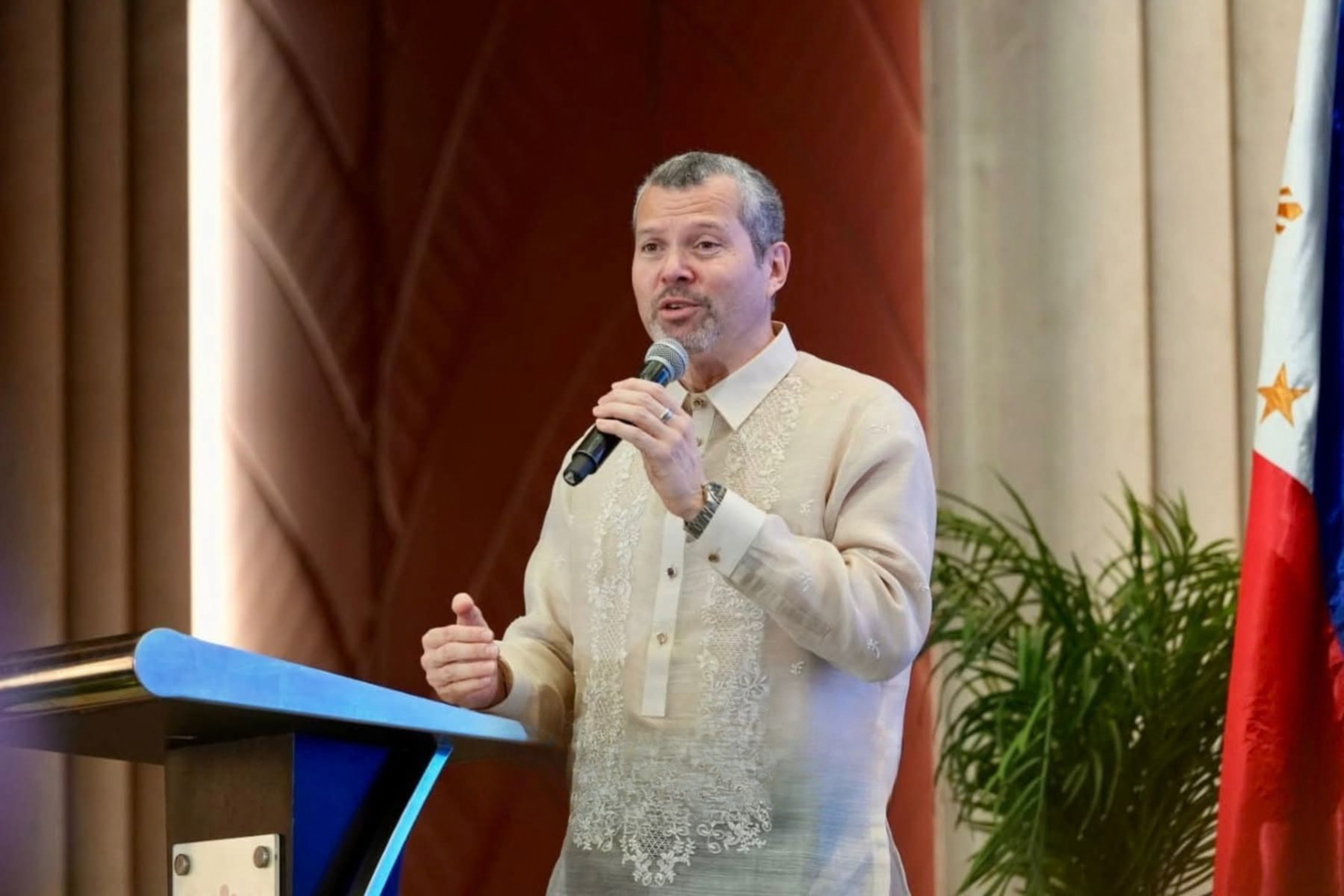
PHOTO COURTESY: MARINA
IMO Secretary General Arsenio Dominguez emphasized that reforms must keep pace with innovation. As ships transition to cleaner fuels and adopt increasingly sophisticated technology, he stressed that training frameworks must likewise adapt to equip seafarers with the necessary knowledge and competencies. He reaffirmed the IMO’s commitment to supporting Member States in strengthening implementation, while highlighting that regulatory modernization must be matched by continued investment in seafarers themselves.
“Shipping must invest in people,†Dominguez underscored, noting that those serving at sea deserve dignity, adequate living conditions, and reliable internet connectivity — standards increasingly expected in modern workplaces.

ADVERTISEMENT
As one of the world’s largest suppliers of maritime professionals, the Philippines plays a pivotal role in ensuring that global reforms translate into concrete improvements in education and certification systems. The Maritime Industry Authority (MARINA), led by Administrator Sonia Malaluan, reiterated the country’s commitment to keeping Filipino seafarers competent, competitive, and future-ready.
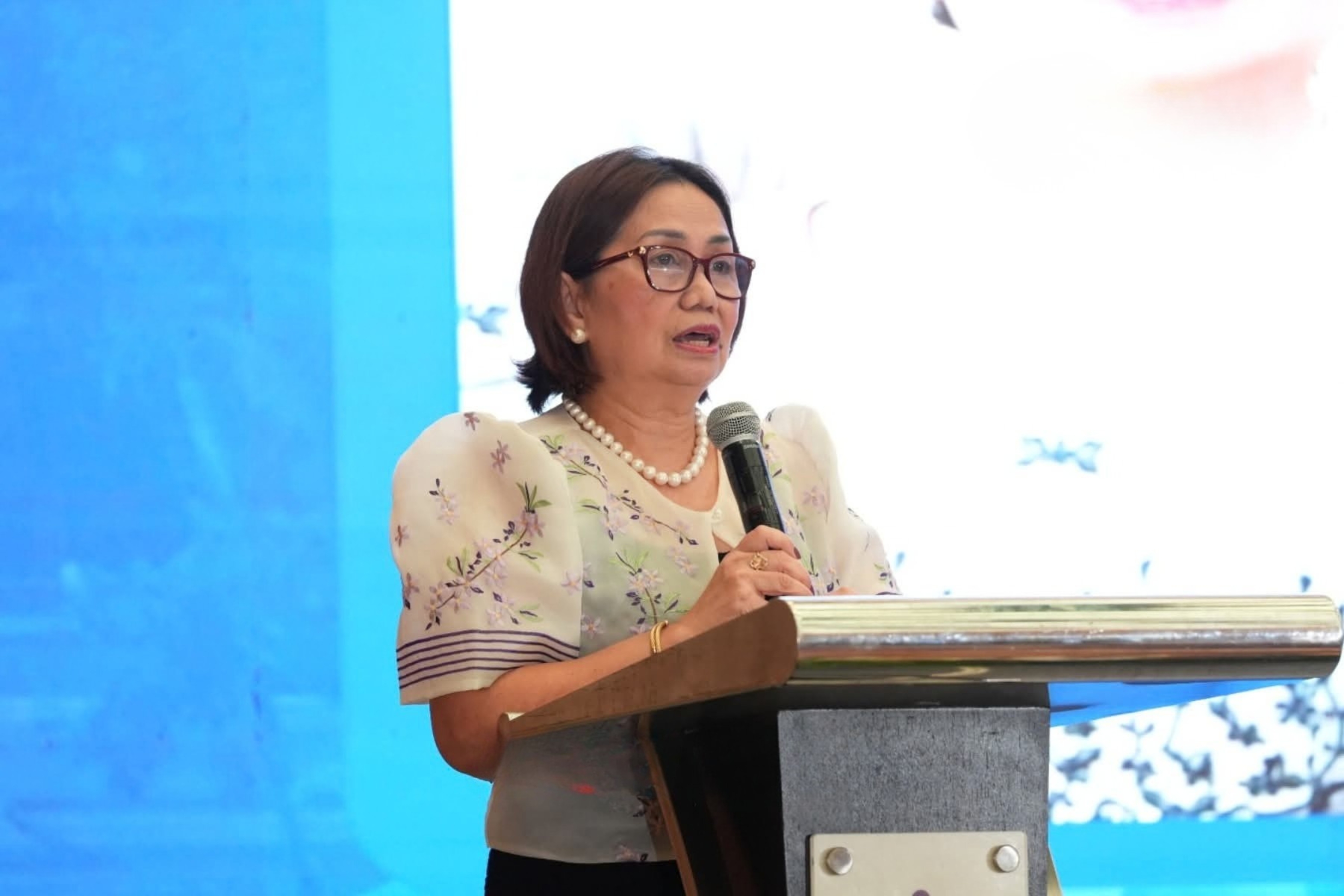
PHOTO COURTESY: MARINA
Malaluan highlighted the responsibility of maritime nations to adapt to evolving competency requirements driven by environmental regulations, geopolitical shifts, and rapidly advancing ship technologies. She described the ongoing review of the STCW Convention as an opportunity to further strengthen maritime education and training systems, reinforcing global confidence in Filipino seafarers.
Adding a broader policy dimension to the discussion, Teodoro Locsin Jr. called for a comprehensive and forward-looking review of global standards. He emphasized the need to address automation, digitalization, safe handling of alternative fuels, and prevention of violence and harassment at sea.

“If ships are to shift to cleaner energy, training must shift with them,†he said, stressing that safety must remain central to energy transition efforts. He also underscored the importance of accountability and zero tolerance for harassment, ensuring respectful and inclusive working environments for all seafarers.
As the maritime industry undergoes one of its most significant transitions in decades, the Manila forum delivered a unified message: global standards must evolve alongside innovation, and seafarers must remain at the heart of the industry’s transformation.
