
MARINO PH
Your Maritime Digital Hub

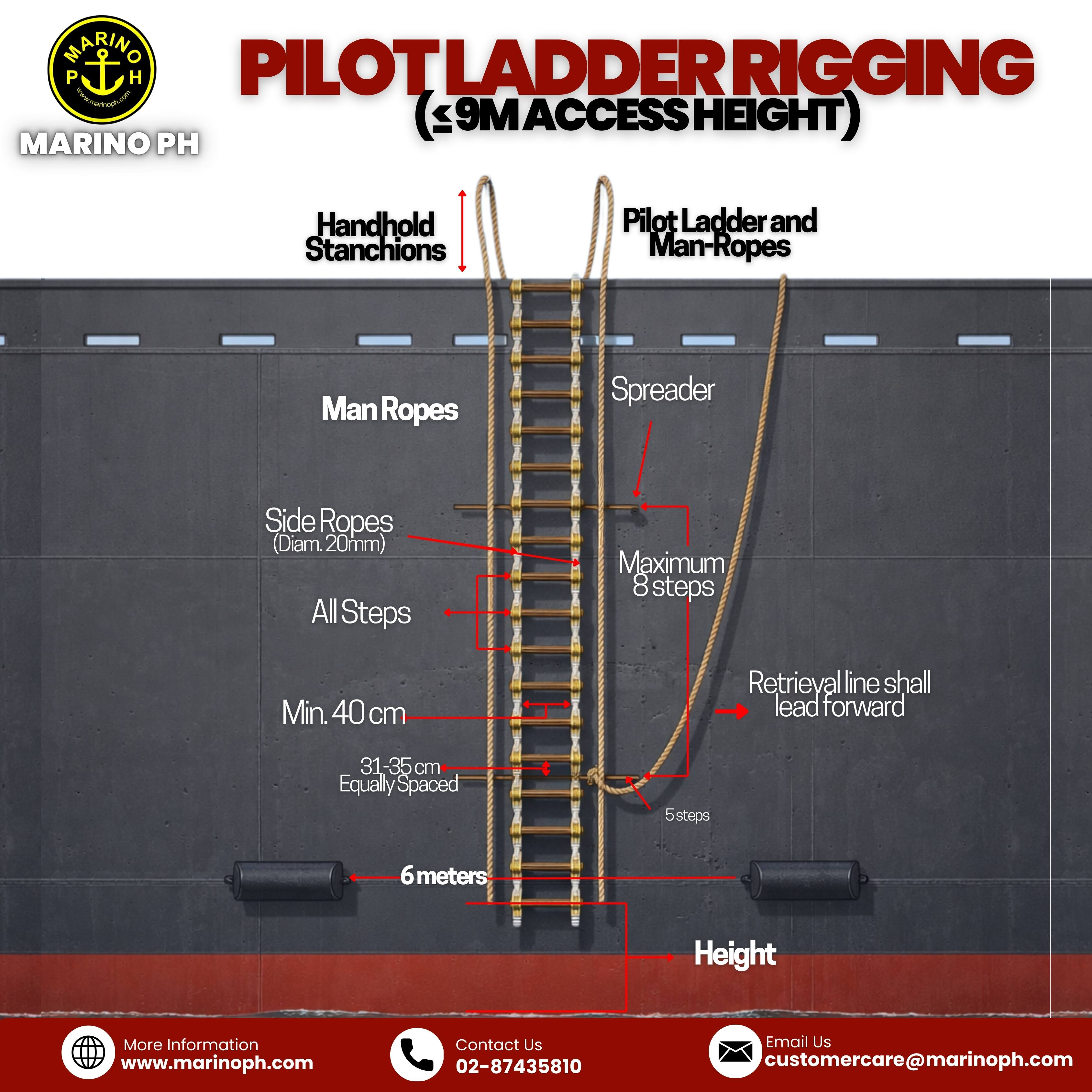
A pilot ladder is a critical piece of equipment used for the safe embarkation and disembarkation of marine pilots. Proper rigging ensures compliance with SOLAS regulations and promotes safe transfer operations between the vessel and the pilot boat.
Below are the components and their corresponding descriptions:
1. Handhold Stanchions
Vertical supports installed at the ship’s deck edge to provide a secure handhold for pilots when stepping from the ladder onto the deck. They must be rigid, properly secured, and positioned to allow safe and unobstructed access.
2. Pilot Ladder
The rope ladder used by marine pilots to board or disembark a vessel. It consists of wooden steps secured between two side ropes. The ladder must be in good condition, free from damage, and rigged in accordance with safety regulations.
3. Man Ropes
Two ropes positioned on each side of the pilot ladder to provide additional support while climbing. Man ropes must be properly secured to strong points on deck and should not interfere with the ladder’s proper positioning.

ADVERTISEMENT
6. Step Spacing (31–35 cm, Equally Spaced)
Each step must be equally spaced between 31 cm and 35 cm apart. Proper spacing ensures safe and ergonomic climbing for the pilot.
7. Minimum Step Width (40 cm)
Each step must have a minimum width of 40 cm to provide adequate footing and stability during transfer operations.
8. Spreader
Longer steps installed at specified intervals to prevent the ladder from twisting. Spreaders ensure the ladder remains stable and hangs straight against the vessel’s side.
9. Maximum of 8 Steps Between Spreaders
There must not be more than eight steps between spreaders. This requirement minimizes ladder twisting and enhances operational safety.
10. Retrieval Line (Lead Forward)
A line attached to the bottom of the ladder used to retrieve or adjust its position. The retrieval line must lead forward toward the bow and should not create upward tension that could compromise ladder stability.
11. Ladder Height (Up to 9 Meters Access Height)
For access heights not exceeding 9 meters, the ladder must be properly measured and rigged to ensure it extends safely from the deck to the pilot boat. The ladder should rest firmly against the ship’s hull without obstruction.
12. Safe Positioning (Clear of Obstructions)
The ladder must be rigged in a location free from discharges, protrusions, or hazardous areas. It should be positioned to allow safe approach and departure of the pilot boat.
