MARINO PH
Your Maritime Digital Hub

RESERVE BUOYANCY
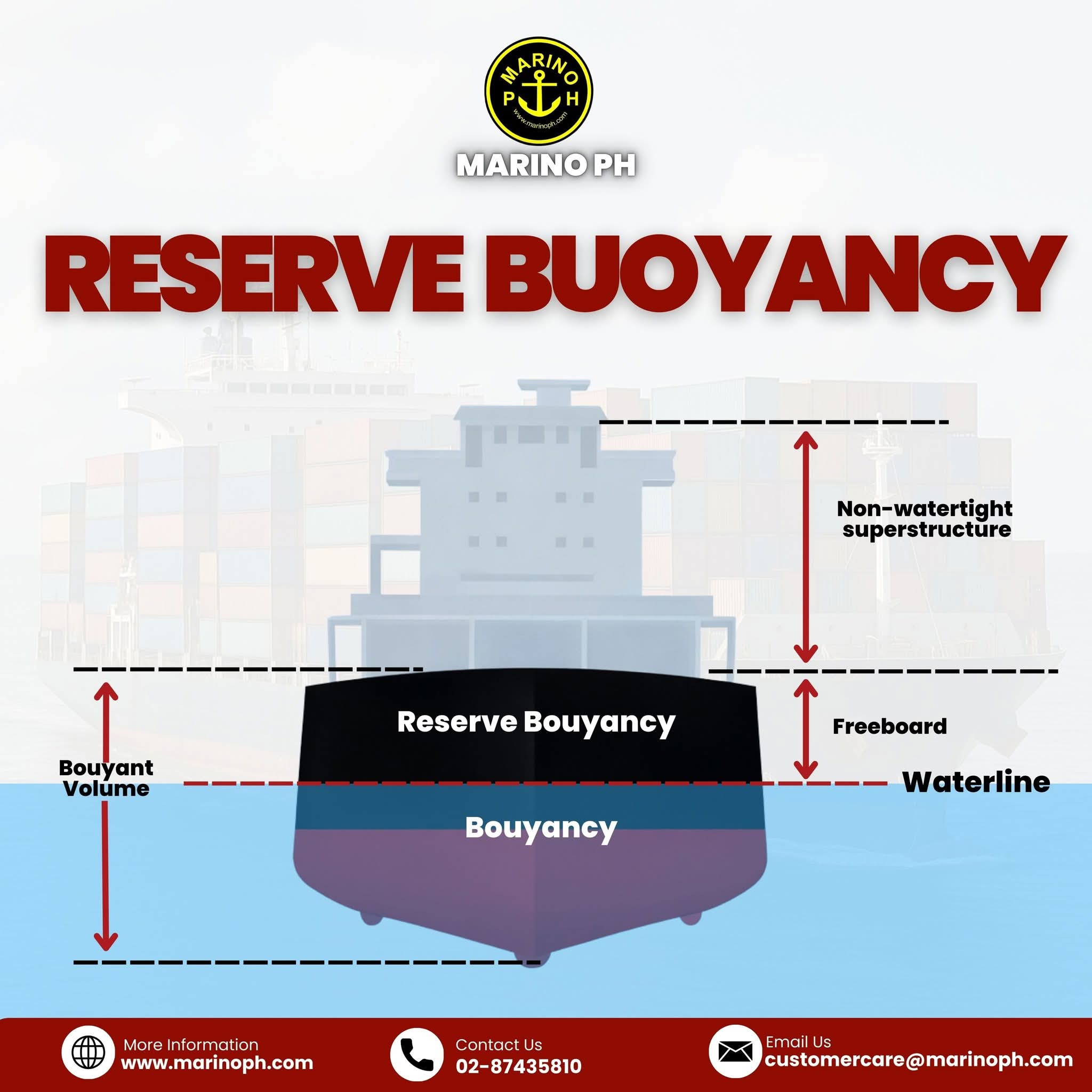
Reserve Buoyancy refers to the additional buoyant force available in a vessel beyond what is required to keep it afloat at its current load. It is the watertight volume of a ship above the waterline that helps the vessel remain stable and safe, especially during rough seas, flooding, or added weight.
Buoyancy
â—The upward force exerted by water that keeps a ship floating.
â—It is created by the displacement of water equal to the ship’s weight.
Reserve Buoyancy
â—The enclosed, watertight volume above the waterline.
â—Provides extra floating ability if the ship takes on additional load or encounters heavy weather.
â—Critical for safety and survivability.
Waterline
â—The line where the hull meets the surface of the water.
â—Indicates how deep the ship is sitting in the water.

ADVERTISEMENT
Freeboard
â—The vertical distance between the waterline and the main deck.
â—Higher freeboard generally means greater reserve buoyancy and improved seaworthiness.
Buoyant Volume
â—The submerged portion of the ship below the waterline.
â—Responsible for generating the buoyant force that supports the ship’s weight.
Non-Watertight Superstructure
â—Structures above the main deck that are not fully sealed against water.
â—These areas typically do not contribute significantly to reserve buoyancy.
