MARINO PH
Your Maritime Digital Hub

Rising Maritime Security Threats: Confirmed Vessel Attacks as of March 25, 2026
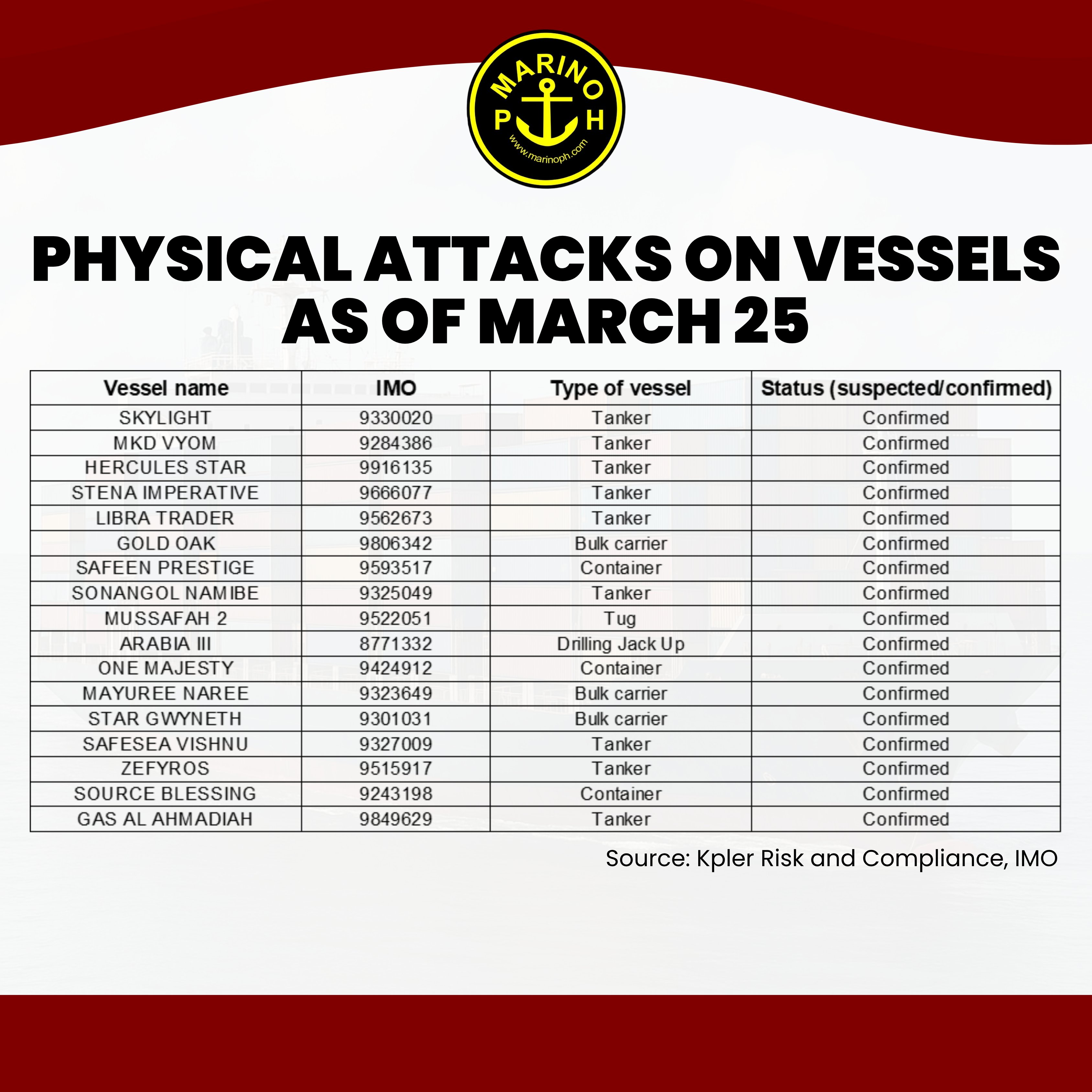
The global maritime industry is facing renewed security concerns following confirmed reports of physical attacks on multiple vessels as of March 25, 2025. Data sourced from Kpler Risk and Compliance, alongside records from the International Maritime Organization (IMO), highlight a troubling pattern of incidents affecting various ship types across key international routes.
A total of seventeen vessels have been identified as targets of confirmed attacks. These include oil tankers, bulk carriers, container ships, a tug vessel, and even a drilling jack-up unit—indicating that the threat is not limited to a single segment of the maritime industry. The diversity of affected vessels suggests that attackers are opportunistic, exploiting vulnerabilities across multiple operational environments.
The rise in these incidents underscores growing risks to global trade, as maritime shipping remains the backbone of international commerce. Disruptions caused by such attacks can lead to delays, increased insurance costs, and heightened operational challenges for shipowners and operators. More importantly, these events pose serious safety concerns for seafarers, who remain on the frontlines of these emerging threats.

ADVERTISMENT
Industry stakeholders are now being urged to strengthen onboard security protocols and enhance situational awareness, particularly in high-risk areas. Coordination between shipping companies, naval forces, and international regulatory bodies is becoming increasingly critical in order to mitigate risks and ensure the safe passage of vessels worldwide.
Furthermore, the role of international cooperation cannot be overstated. Organizations such as the IMO continue to advocate for unified strategies, improved reporting mechanisms, and the adoption of best practices to counter maritime security threats. The current situation serves as a reminder that safeguarding global shipping lanes requires collective vigilance and sustained commitment from all sectors of the maritime community.
As the situation evolves, continuous monitoring and transparent reporting will be essential. The maritime industry must remain proactive, adaptive, and resilient in addressing these challenges to protect both global trade and the lives of those at sea.
