
MARINO PH
Your Maritime Digital Hub

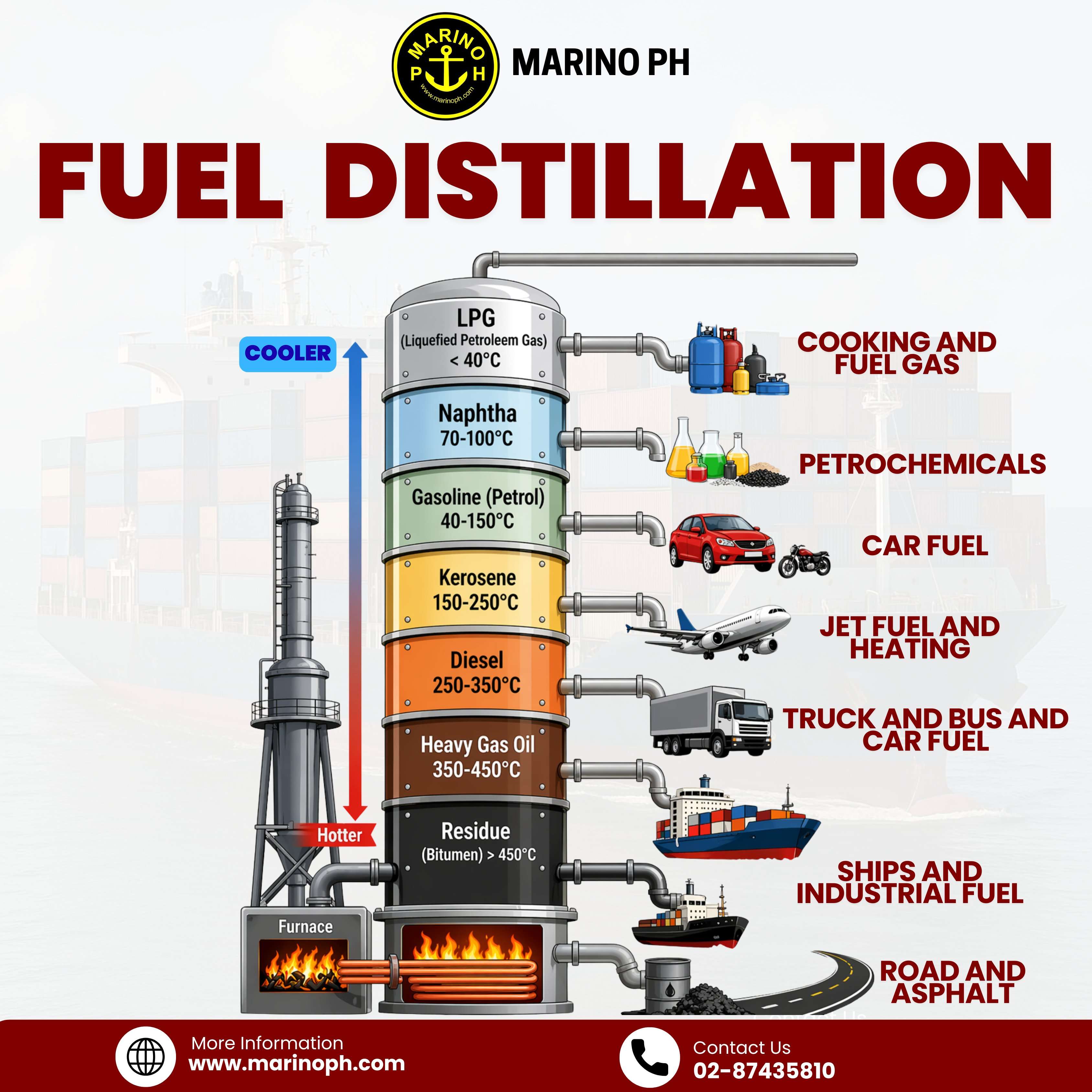
Fuel Distillation: How Crude Oil Becomes Everyday Energy
Fuel distillation is the core process that transforms crude oil into the wide range of fuels and products we use every day from cooking gas and gasoline to diesel and asphalt. At the heart of this process is , a method that separates hydrocarbons based on their boiling points.
How the Process Works
Crude oil is first heated in a furnace to extremely high temperatures. This heated mixture then enters a tall distillation column, where temperatures are hottest at the bottom and gradually cool toward the top. As the vapor rises, different components condense at different levels depending on their boiling ranges.
Lighter fractions rise higher before condensing, while heavier fractions settle lower in the column. This allows refineries to efficiently separate crude oil into usable products.
Key Products and Their Uses
LPG (Liquefied Petroleum Gas) – below 40°C
Collected at the top of the column, LPG is used for cooking, heating, and as fuel gas.

ADVERTISMENT
Naphtha (70–100°C)
A crucial feedstock for petrochemical production, used to make plastics, chemicals, and synthetic materials.
Gasoline/Petrol (40–150°C)
One of the most widely used fuels, powering cars and motorcycles.
Kerosene (150–250°C)
Used as jet fuel and for heating and lighting in some regions.
Diesel (250–350°C)
Commonly used in trucks, buses, and some cars due to its efficiency and power.
Heavy Gas Oil (350–450°C)
Utilized in large engines, industrial machinery, and sometimes further processed into lighter fuels.
Residue/Bitumen (above 450°C)
The heaviest fraction, used for road construction (asphalt) and heavy industrial applications.
Why Fuel Distillation Matters
Fuel distillation is essential to modern life. It ensures that crude oil is efficiently converted into valuable products that power transportation, support industries, and enable infrastructure development. Without this process, the raw crude oil extracted from the earth would have limited direct use.
