
MARINO PH
Your Maritime Digital Hub

Ship stability is the ability of a vessel to return to its original upright position after being affected by external forces such as wind, waves, cargo movement, or turning actions. Stability is one of the most important factors in ship safety because it helps prevent excessive listing, capsizing, and cargo shifting during a voyage.
The stability of a ship depends on the relationship between its center of gravity (G), center of buoyancy (B), and metacenter (M). When a ship heels, the buoyant force acts upward through the center of buoyancy, while the ship's weight acts downward through the center of gravity. The position of these points determines whether the vessel will return to an upright position, remain in its new position, or continue to heel further.
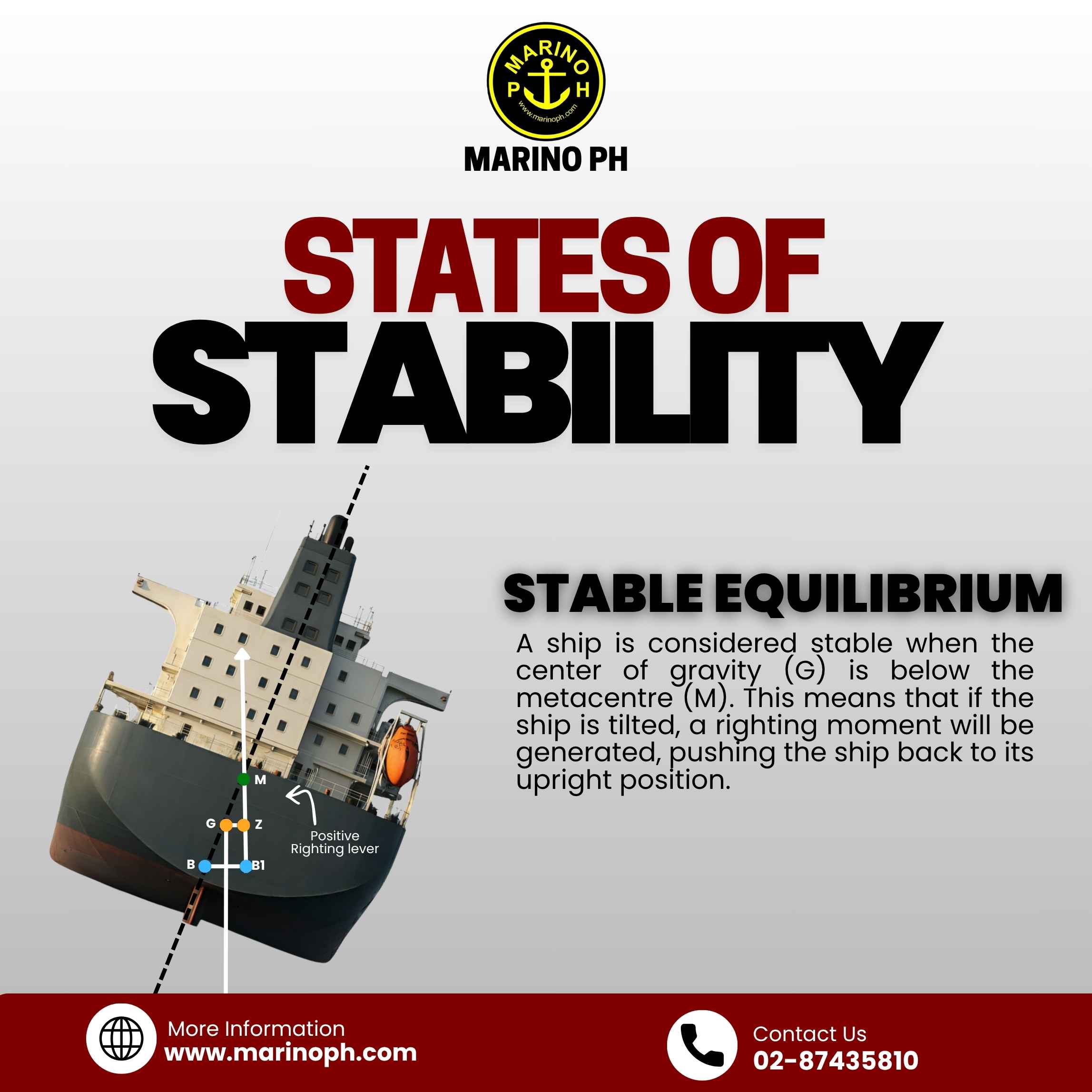
1. Stable Equilibrium
A ship is in stable equilibrium when the metacenter (M) is above the center of gravity (G). If the vessel is tilted by an external force, it develops a righting moment that returns it to its original upright position once the force is removed. This is the safest and most desirable condition for a ship at sea.
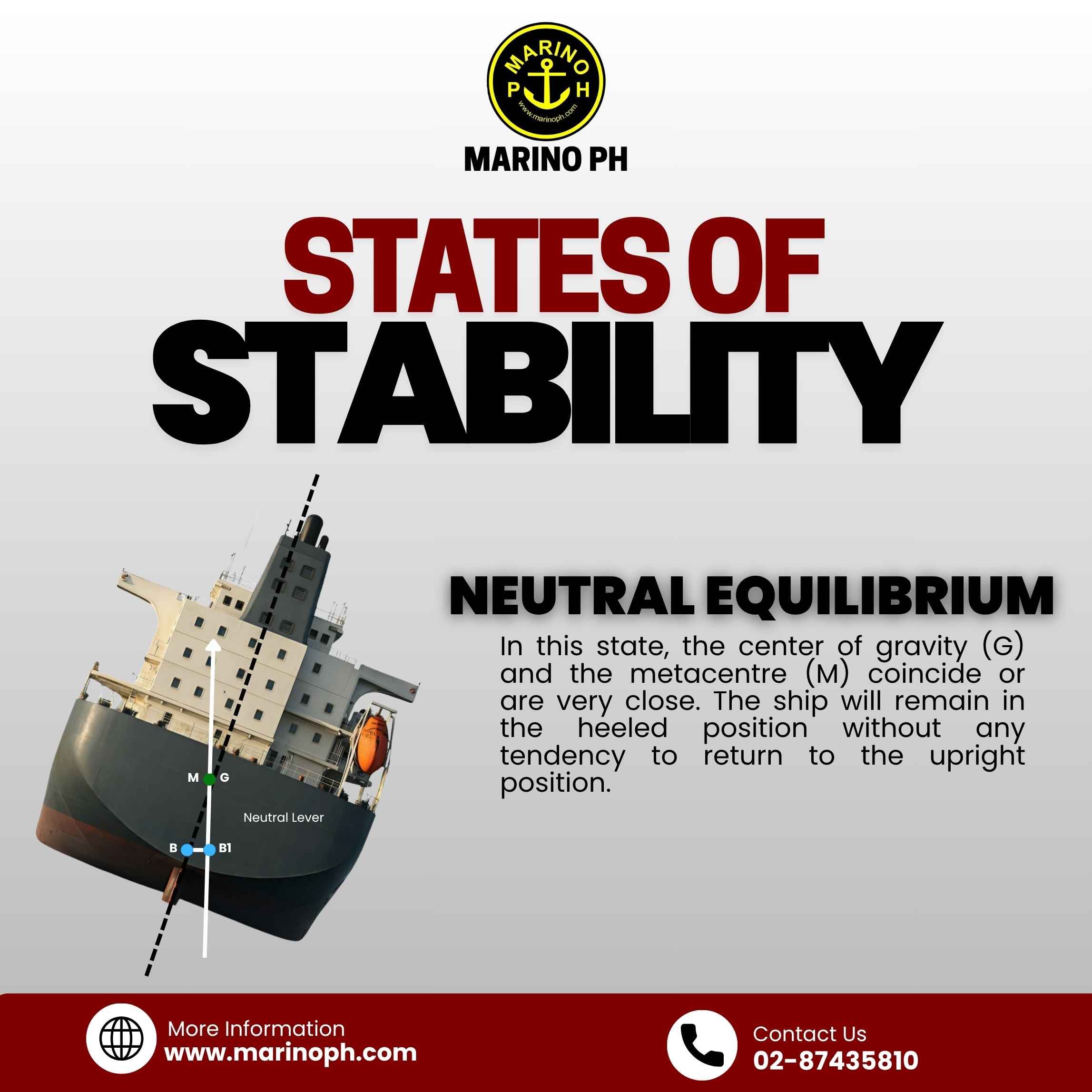
2. Neutral Equilibrium
A ship is in neutral equilibrium when the metacenter (M) and the center of gravity (G) are at the same level. When the vessel heels due to an external force, it remains in the new position after the force is removed. It neither returns to the upright position nor continues to heel further.
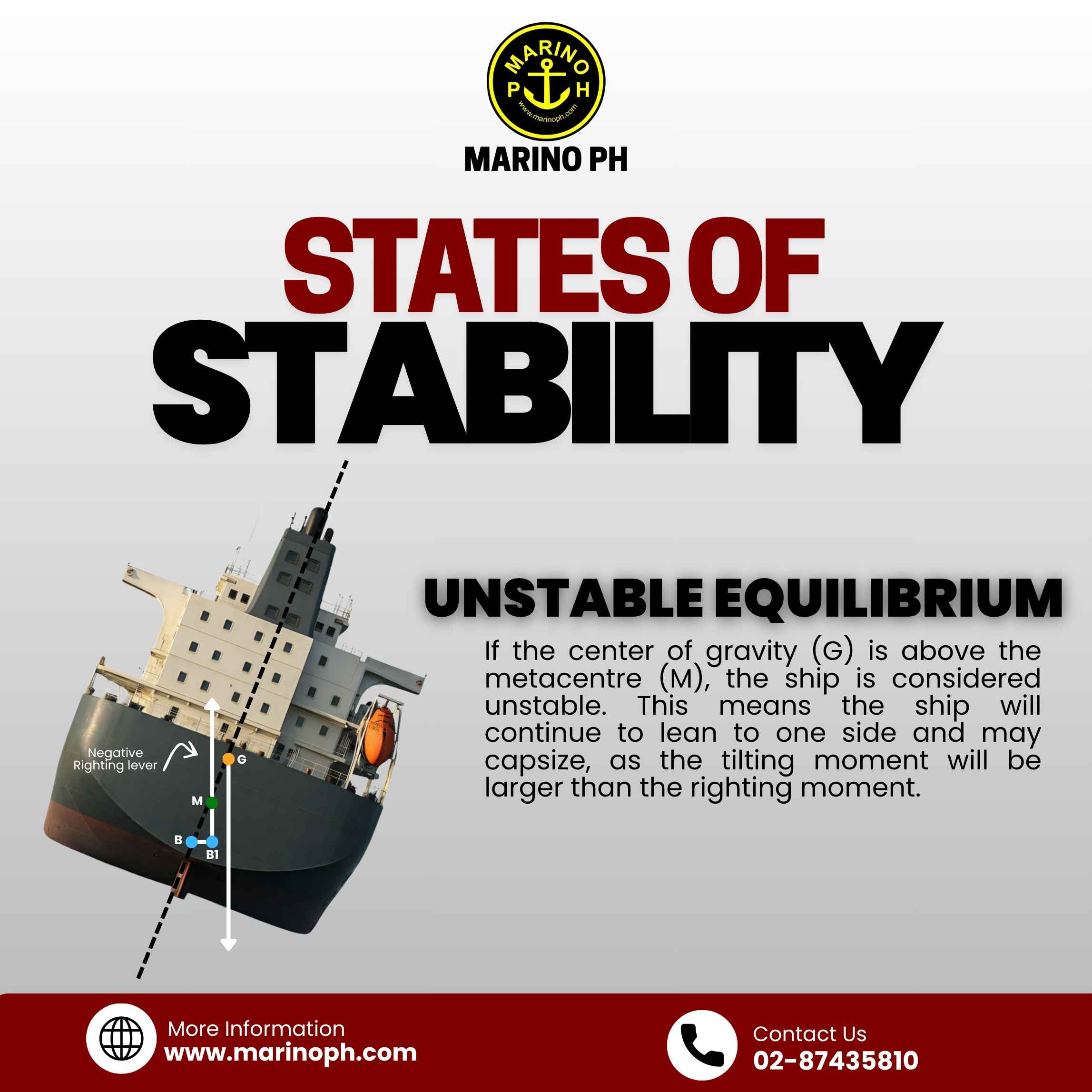
3. Unstable Equilibrium
A ship is in unstable equilibrium when the center of gravity (G) is above the metacenter (M). In this condition, a small heel can cause the vessel to continue leaning further instead of returning upright. This creates an overturning moment and significantly increases the risk of capsizing.
