MARINO PH
Your Maritime Digital Hub

Emission Control Technologies on Modern Ships: EGR, HP-SCR, and LP-SCR
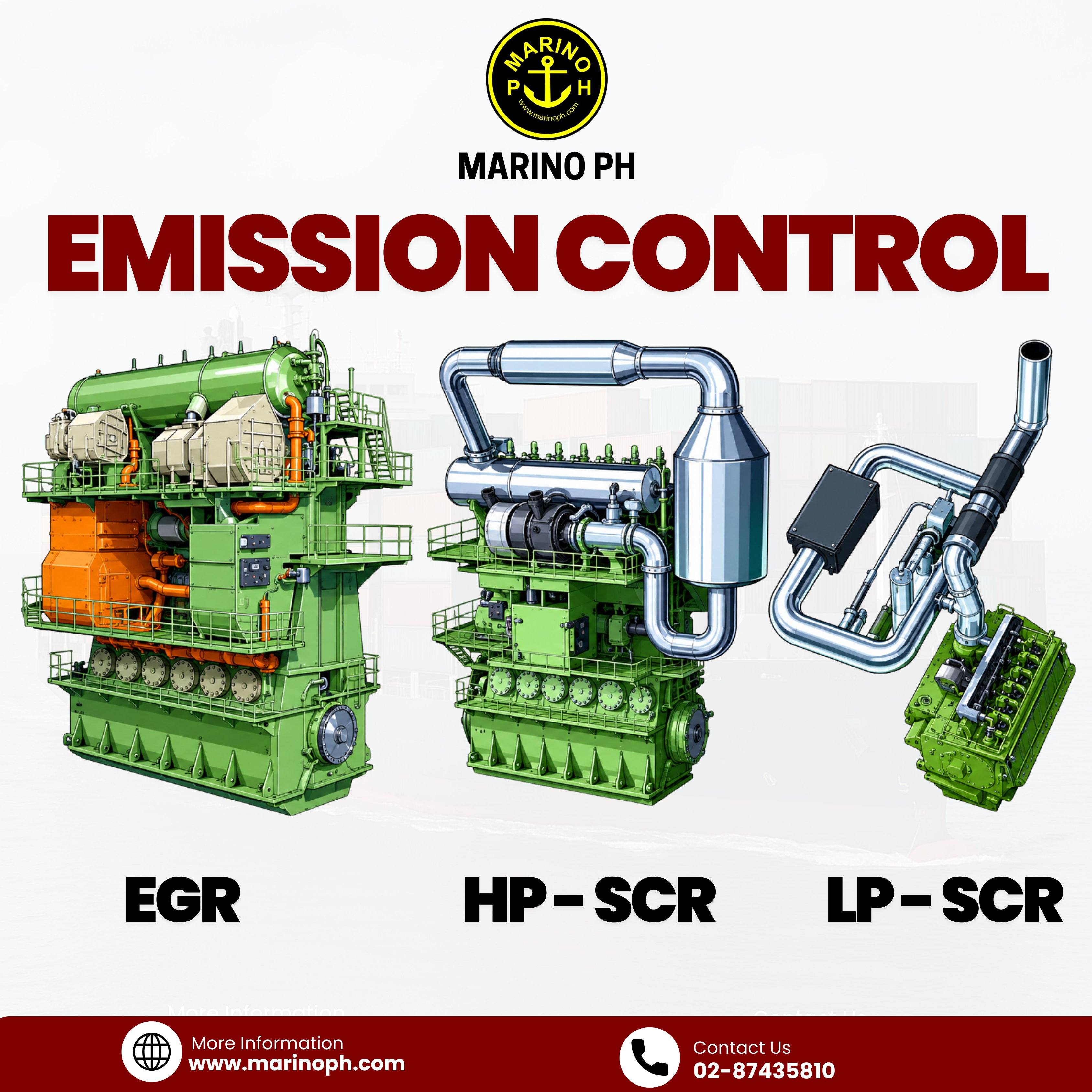
As environmental regulations become increasingly stringent, the maritime industry continues to adopt advanced emission control technologies to reduce harmful exhaust gases from marine diesel engines. The International Maritime Organization (IMO) has introduced strict limits on nitrogen oxide (NOx) emissions through MARPOL Annex VI, driving shipowners and engine manufacturers to develop effective solutions that ensure compliance while maintaining engine performance. Among the most widely used technologies today are Exhaust Gas Recirculation (EGR), High-Pressure Selective Catalytic Reduction (HP-SCR), and Low-Pressure Selective Catalytic Reduction (LP-SCR).
Exhaust Gas Recirculation (EGR) reduces NOx emissions by redirecting a portion of the engine’s exhaust gases back into the combustion chamber. By mixing exhaust gas with fresh intake air, the oxygen concentration inside the cylinder is lowered, resulting in reduced combustion temperatures. Since NOx formation increases at high temperatures, lowering the combustion temperature significantly reduces NOx production. EGR systems are integrated directly into the engine and are particularly effective for vessels operating in Emission Control Areas (ECAs) where strict environmental standards apply.
High-Pressure Selective Catalytic Reduction (HP-SCR) is another widely adopted solution for meeting IMO Tier III requirements. In this system, exhaust gases pass through a catalytic reactor before reaching the turbocharger. A urea-based solution is injected into the exhaust stream, where it reacts with NOx inside the catalyst and converts it into harmless nitrogen and water vapor. Because the SCR unit is located in the high-pressure section of the exhaust system, exhaust temperatures remain sufficiently high for efficient catalytic reactions, making HP-SCR highly effective across a wide range of engine loads.

ADVERTISMENT
Low-Pressure Selective Catalytic Reduction (LP-SCR) operates on the same chemical principle as HP-SCR but is installed after the turbocharger. This configuration allows for a simpler engine arrangement and can improve fuel efficiency by reducing engine backpressure. LP-SCR systems are often favored on larger marine engines due to their flexibility in installation and excellent NOx reduction performance. However, maintaining adequate exhaust gas temperature is essential to ensure optimal catalyst efficiency.
Each of these technologies offers distinct advantages depending on vessel type, engine design, operational profile, and regulatory requirements. Whether through EGR’s in-cylinder emission reduction or the catalytic treatment provided by HP-SCR and LP-SCR systems, these solutions play a vital role in helping the global shipping industry achieve cleaner, more sustainable operations while complying with international environmental standards.
