
MARINO PH
Your Maritime Digital Hub

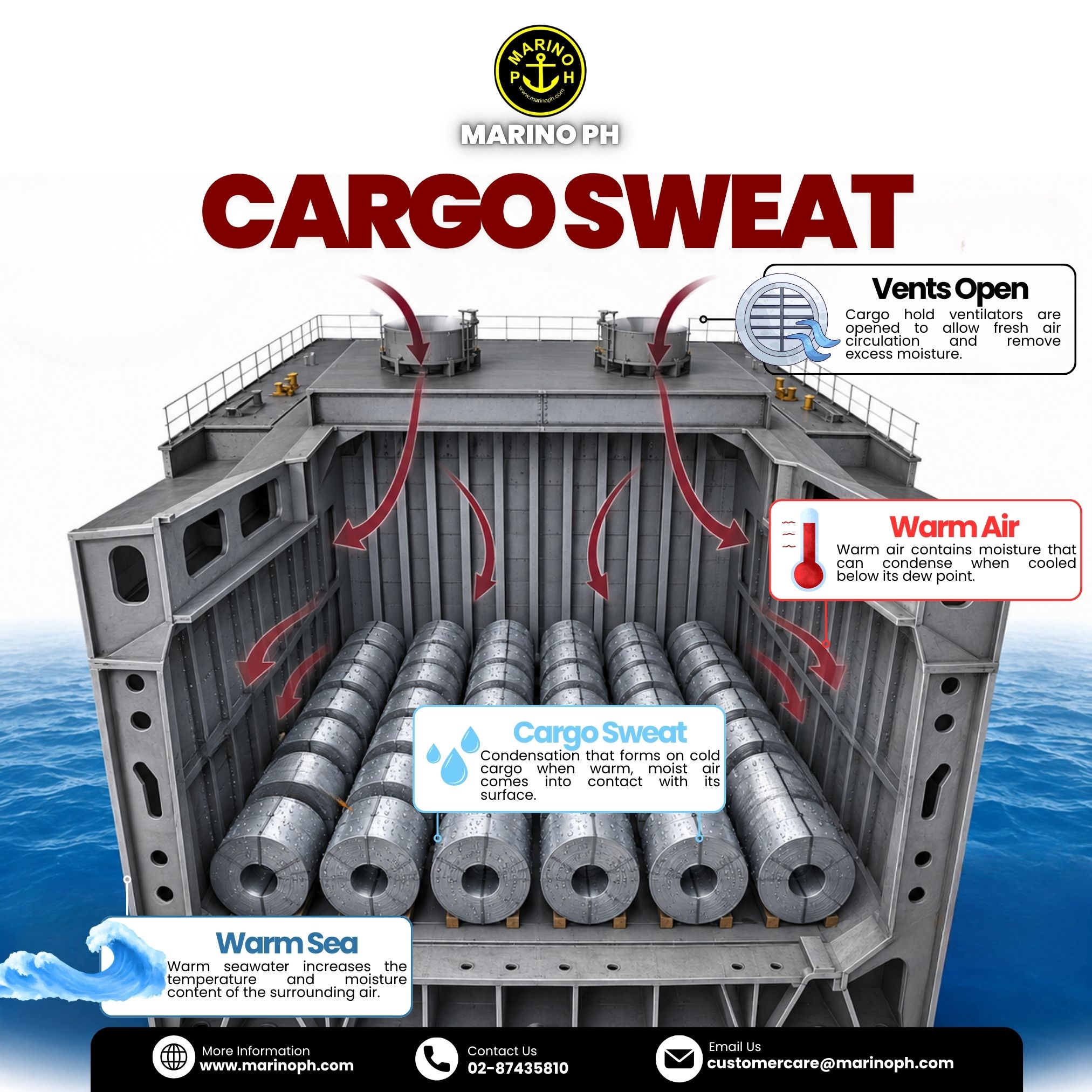
Cargo sweat and ship sweat are common moisture-related conditions encountered during sea voyages, particularly when vessels sail between regions with different temperatures and climates. Understanding the difference between these two phenomena is important to prevent cargo damage and maintain cargo quality throughout the voyage.
Cargo Sweat occurs when warm, moist air inside a cargo hold comes into contact with a colder cargo surface. As the air cools below its dew point, moisture condenses directly on the cargo. This condition is commonly experienced when a vessel carrying cold cargo enters a warm and humid environment. The resulting condensation can damage cargoes that are sensitive to moisture, such as steel products, bagged goods, paper, machinery, and agricultural products.
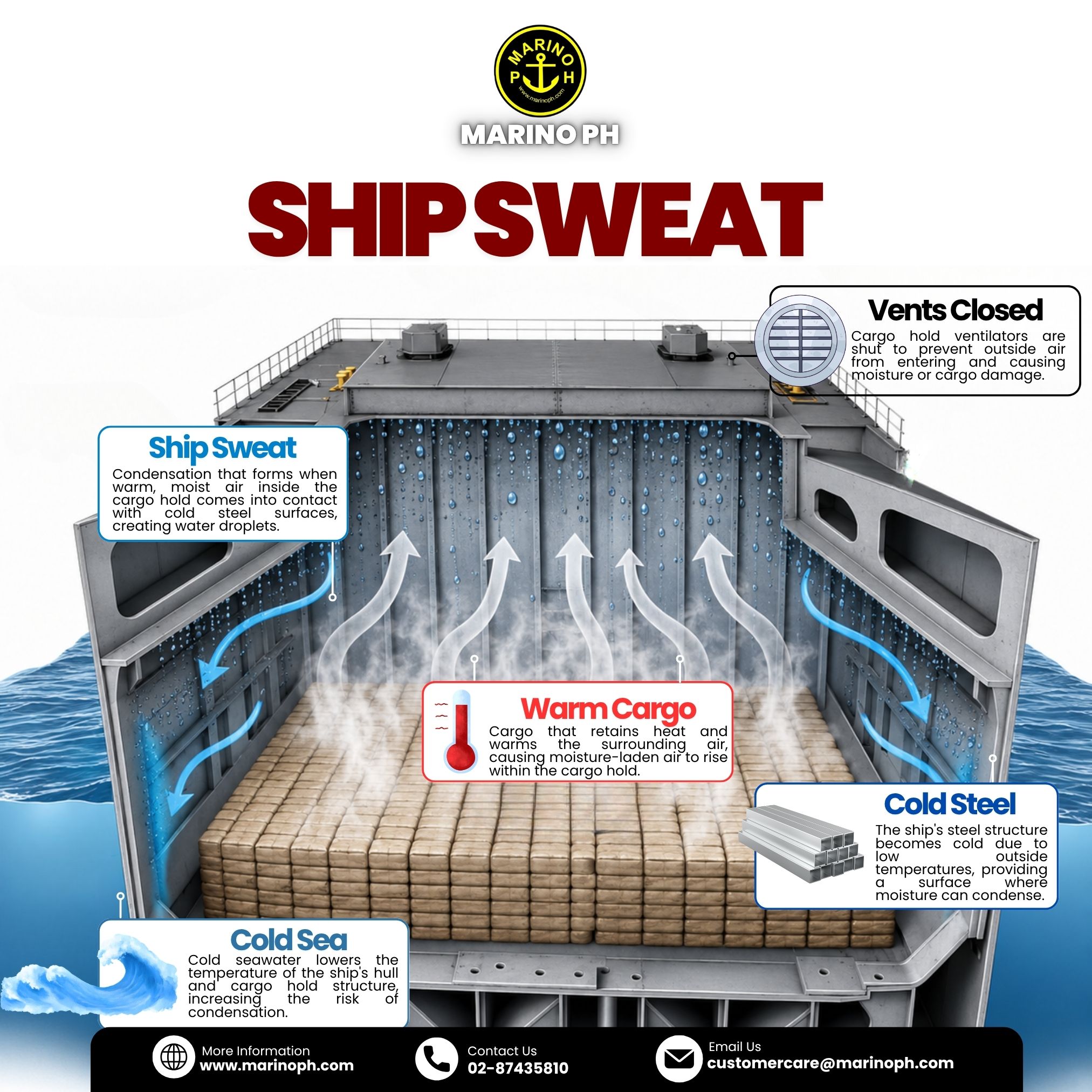
Ship Sweat, on the other hand, occurs when warm, humid air inside the cargo hold comes into contact with the colder internal surfaces of the ship, including the hull plating, bulkheads, deckhead, or hatch covers. Moisture condenses on these steel surfaces and may eventually drip onto the cargo below. Ship sweat is often encountered when a vessel moves from a warm climate into colder regions, causing the ship's structure to become cooler than the surrounding air inside the hold.

ADVERTISEMENT
Proper cargo hold ventilation is one of the most effective methods of preventing both cargo sweat and ship sweat. Ventilation decisions should be based on temperature and dew point calculations rather than routine practice. Regular monitoring of cargo hold conditions, weather changes, and cargo temperatures helps officers determine the appropriate ventilation strategy.
Effective management of cargo sweat and ship sweat is essential for preserving cargo condition, minimizing claims, and ensuring the safe and efficient transportation of goods across international trade routes.
