MARINO PH
Your Maritime Digital Hub

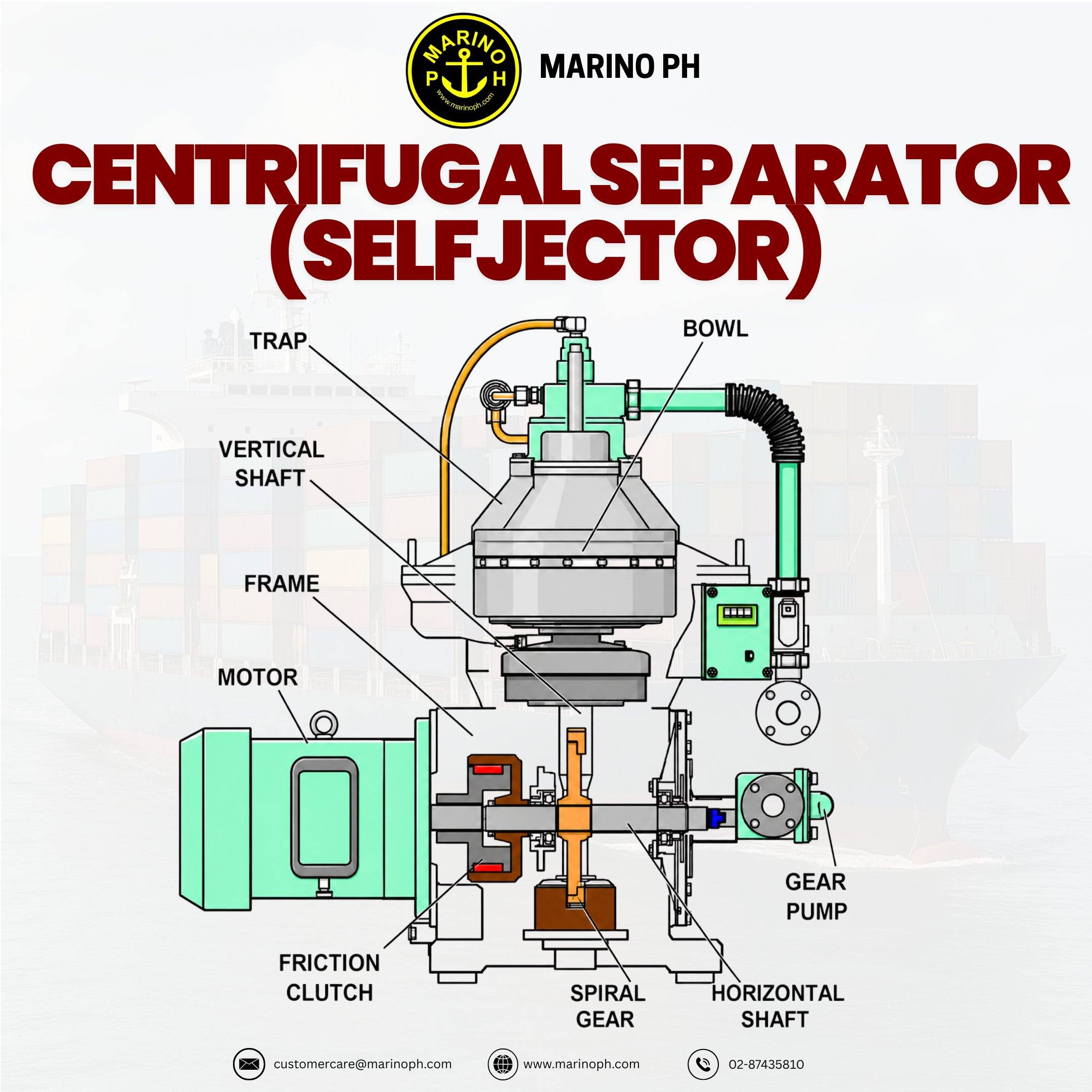
A centrifugal separator, commonly known as a Self-Jector, is one of the most important pieces of purification equipment found in a ship’s engine room. It is designed to remove water, sludge, and solid contaminants from fuel oil and lubricating oil, ensuring that only clean oil is supplied to the main engine and auxiliary machinery. By maintaining oil cleanliness, the separator helps improve engine performance, reduce wear and tear, and extend the service life of critical components.
The separator operates on the principle of centrifugal force. Inside the rotating bowl, oil is spun at extremely high speeds, generating forces thousands of times greater than gravity. Due to differences in density, heavier impurities such as water and sludge move outward toward the bowl wall, while the lighter purified oil remains closer to the center. The cleaned oil is then discharged for use, while contaminants are collected and periodically expelled.

ADVERTISMENT
A key feature of the Self-Jector type separator is its automatic sludge discharge system. Unlike older manually cleaned separators, the Self-Jector periodically ejects accumulated sludge without stopping operation. This automation reduces maintenance requirements, minimizes downtime, and ensures continuous purification during vessel operations.
The major components of a centrifugal separator include the bowl, vertical shaft, horizontal shaft, spiral gear, motor, friction clutch, gear pump, and frame. The motor drives the bowl through a gear arrangement, while the gear pump supplies oil to the separator. The friction clutch allows smooth acceleration during startup, protecting the machinery from excessive stress.
In modern shipping, centrifugal separators play a vital role in maintaining engine reliability, reducing operating costs, and ensuring compliance with environmental and operational standards. Their ability to continuously remove contaminants makes them an indispensable part of efficient marine engineering operations.
