MARINO PH
Your Maritime Digital Hub

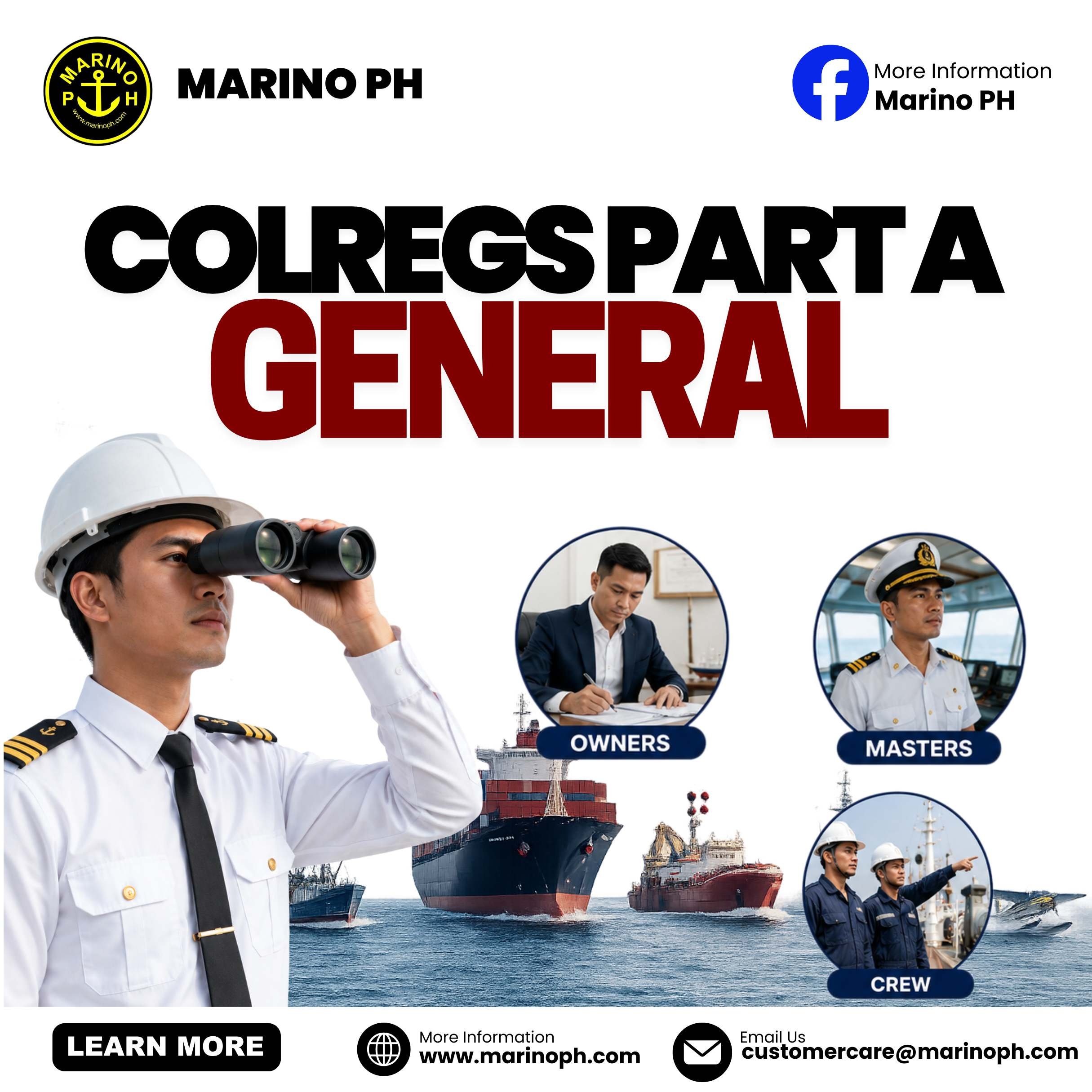
PART A – GENERAL
Rule 1 – Application
Defines where and to whom the COLREGs apply. The rules govern vessels navigating on the high seas and all waters connected to them that are navigable by seagoing vessels, unless local regulations specifically apply.
Rule 2 – Responsibility
States that every vessel, owner, master, and crew remain responsible for taking all necessary precautions to avoid collisions. Good seamanship and common sense must always prevail, even if it means departing from the rules in exceptional situations.
Rule 3 – General Definitions
Provides definitions used throughout the COLREGs, including terms such as vessel, power-driven vessel, sailing vessel, fishing vessel, seaplane, vessel not under command (NUC), vessel restricted in her ability to maneuver (RAM), vessel constrained by her draft (CBD), underway, making way, and restricted visibility.
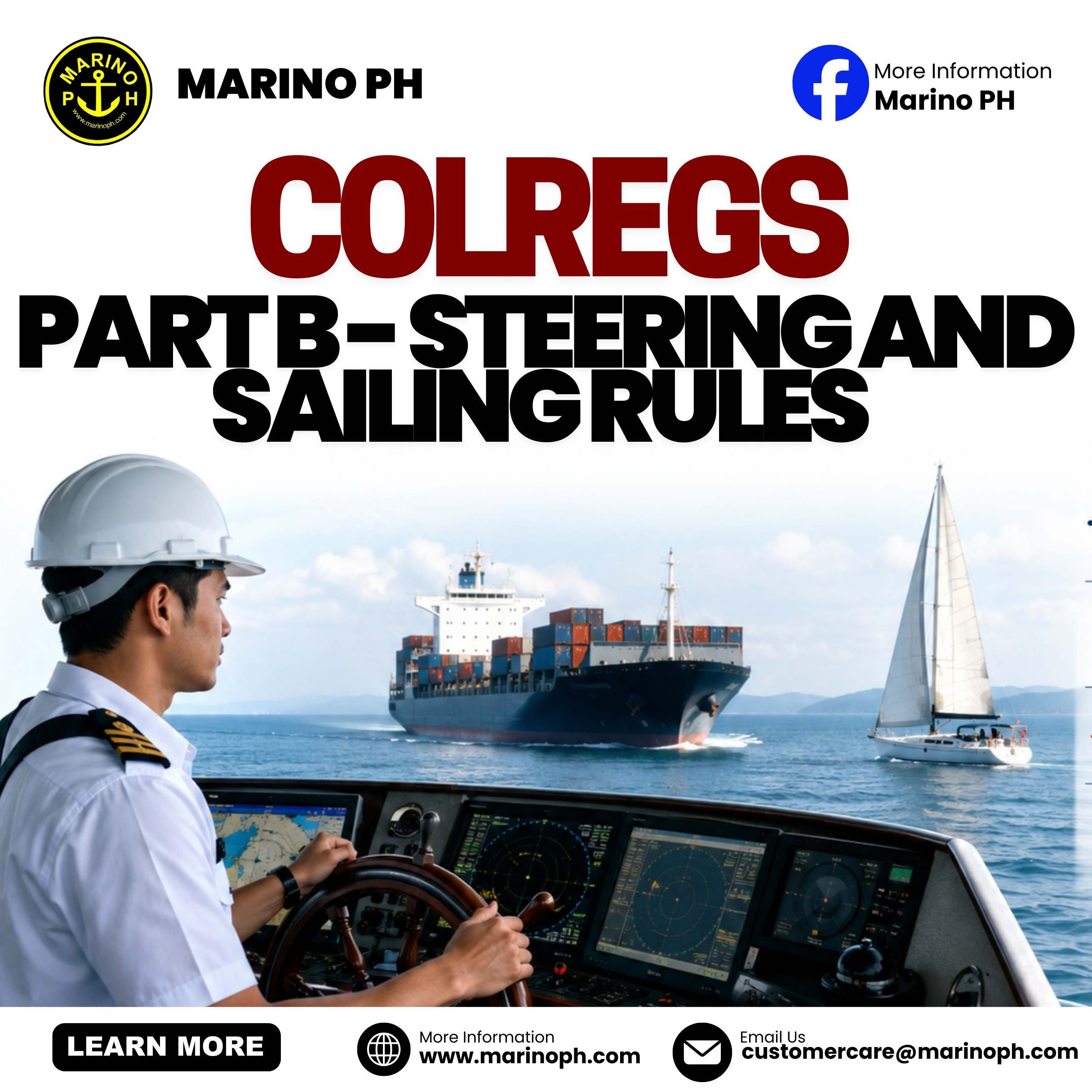
PART B – STEERING AND SAILING RULES
Section I – Conduct of Vessels in Any Condition of Visibility
Rule 4 – Application
Specifies that Rules 4–10 apply in all conditions of visibility.
Rule 5 – Look-out
Every vessel shall at all times maintain a proper look-out by sight and hearing as well as by all available means appropriate in the prevailing circumstances and conditions so as to make a full appraisal of the situation and or the risk of collision.
Rule 6 – Safe Speed
Every vessel must proceed at a safe speed that allows proper action to avoid collision and stop within an appropriate distance considering visibility, traffic, weather, maneuverability, and other factors.
Rule 7 – Risk of Collision
Every vessel shall use all available means, including radar if fitted, to determine whether a risk of collision exists. If there is doubt, the risk shall be considered to exist.
Rule 8 – Action to Avoid Collision
Any action taken to avoid collision shall be positive, timely, and substantial. Alterations of course or speed should be large enough to be readily apparent.
Rule 9 – Narrow Channels
Vessels navigating in narrow channels shall keep as near to the outer limit of the channel on their starboard side as is safe and practicable.
Rule 10 – Traffic Separation Schemes
Vessels using traffic separation schemes shall follow the direction of traffic flow, remain within the correct lane, and cross traffic lanes at right angles whenever practicable.
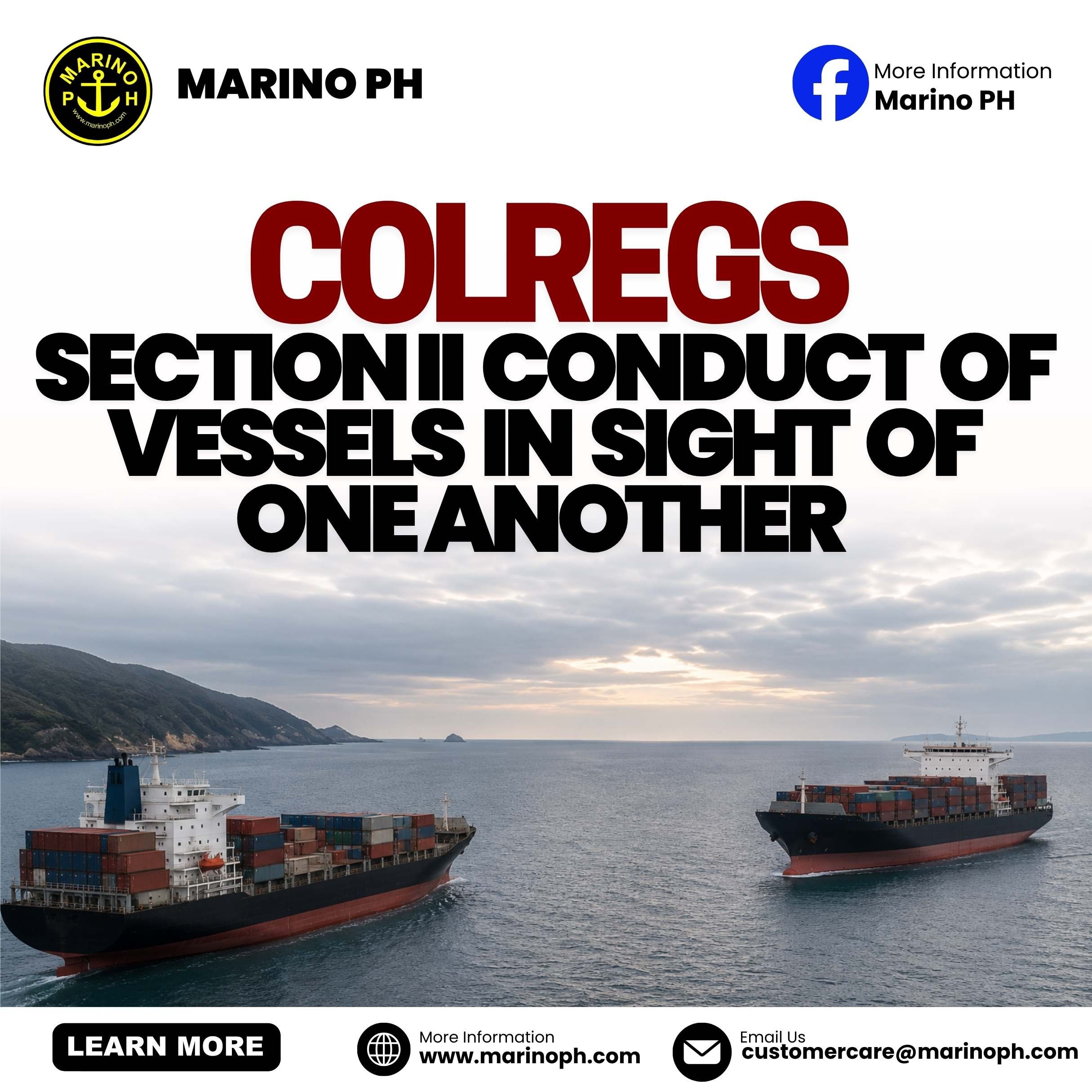
Section II – Conduct of Vessels in Sight of One Another
Rule 11 – Application
Applies to vessels that are in sight of one another.
Rule 12 – Sailing Vessels
Determines which sailing vessel shall keep clear based on the tack each vessel is on.
Rule 13 – Overtaking
Any vessel overtaking another must keep out of the way of the vessel being overtaken until completely past and clear.
Rule 14 – Head-on Situation
When two power-driven vessels meet nearly head-on, each shall alter course to starboard to pass port-to-port.
Rule 15 – Crossing Situation
When two power-driven vessels cross so as to involve risk of collision, the vessel with the other on her starboard side shall keep out of the way.
Rule 16 – Action by Give-way Vessel
The give-way vessel shall take early and substantial action to keep well clear.
Rule 17 – Action by Stand-on Vessel
The stand-on vessel shall maintain course and speed but may take action if the give-way vessel fails to comply. If collision cannot be avoided by the give-way vessel alone, the stand-on vessel must also act.
Rule 18 – Responsibilities Between Vessels
Establishes the order of priority among different vessel types. Generally:
* Vessel Not Under Command (NUC)
* Vessel Restricted in Ability to Maneuver (RAM)
* Vessel Constrained by Draft (CBD)
* Fishing Vessel
* Sailing Vessel
* Power-driven Vessel
* Seaplane/WIG craft (where applicable)
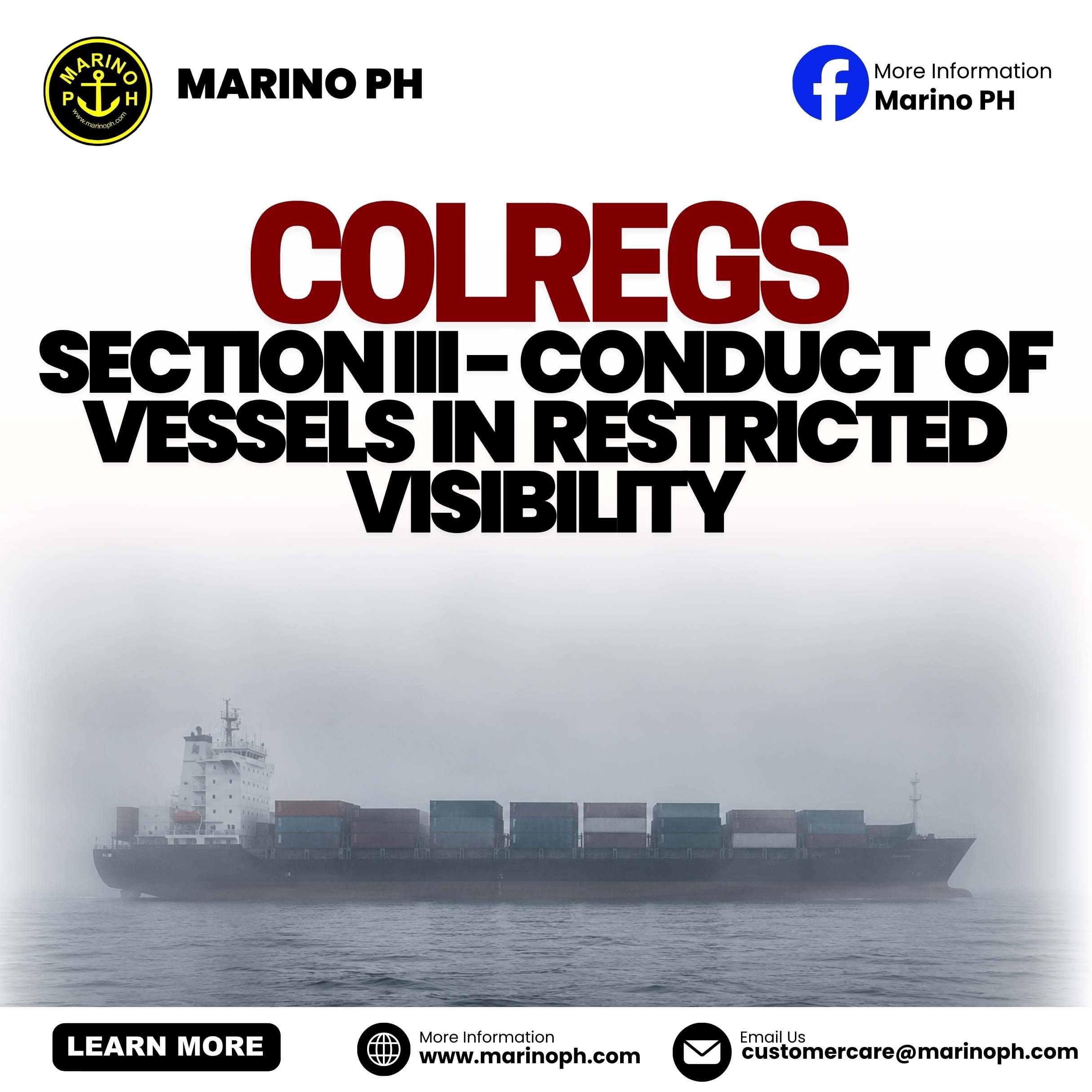
Section III – Conduct in Restricted Visibility
Rule 19 – Conduct of Vessels in Restricted Visibility
Applies to vessels navigating in or near restricted visibility. Every vessel shall proceed at a safe speed, use radar if available, and take early avoiding action.
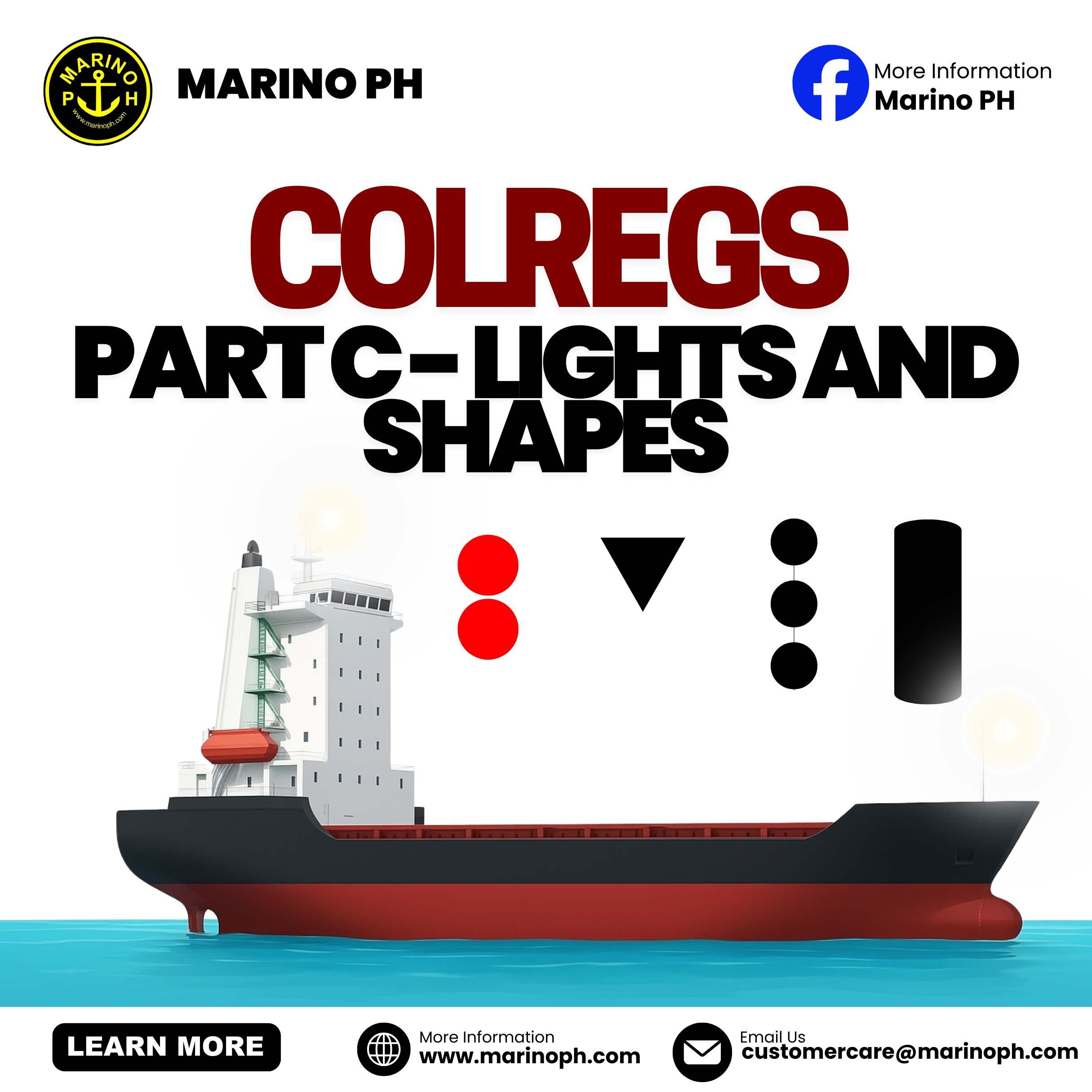
PART C – LIGHTS AND SHAPES
Rule 20 – Application
Specifies when navigation lights and shapes must be displayed.
Rule 21 – Definitions
Defines masthead light, sidelights, sternlight, towing light, all-round light, and flashing light.
Rule 22 – Visibility of Lights
Specifies the minimum ranges at which navigation lights must be visible based on vessel length.
Rule 23 – Power-driven Vessels Underway
Describes the navigation lights required for power-driven vessels underway.
Rule 24 – Towing and Pushing
Prescribes lights and shapes for towing vessels, pushed vessels, and composite units.
Rule 25 – Sailing Vessels and Vessels Under Oars
Specifies lights and shapes required for sailing vessels and small craft propelled by oars.
Rule 26 – Fishing Vessels
Describes lights and shapes displayed by vessels engaged in fishing.
Rule 27 – Vessels Not Under Command or Restricted in Their Ability to Maneuver
Specifies the distinctive lights and shapes displayed by NUC and RAM vessels.
Rule 28 – Vessel Constrained by Draft
Requires constrained-by-draft vessels to display additional lights or shapes indicating their status.
Rule 29 – Pilot Vessels
Pilot vessels engaged on pilotage duty shall display the prescribed white-over-red lights and other required signals.
Rule 30 – Anchored Vessels and Vessels Aground
Specifies the lights, shapes, and additional signals required for vessels at anchor and aground
Rule 31 – Seaplanes
Requires seaplanes to comply with these rules as closely as practicable.
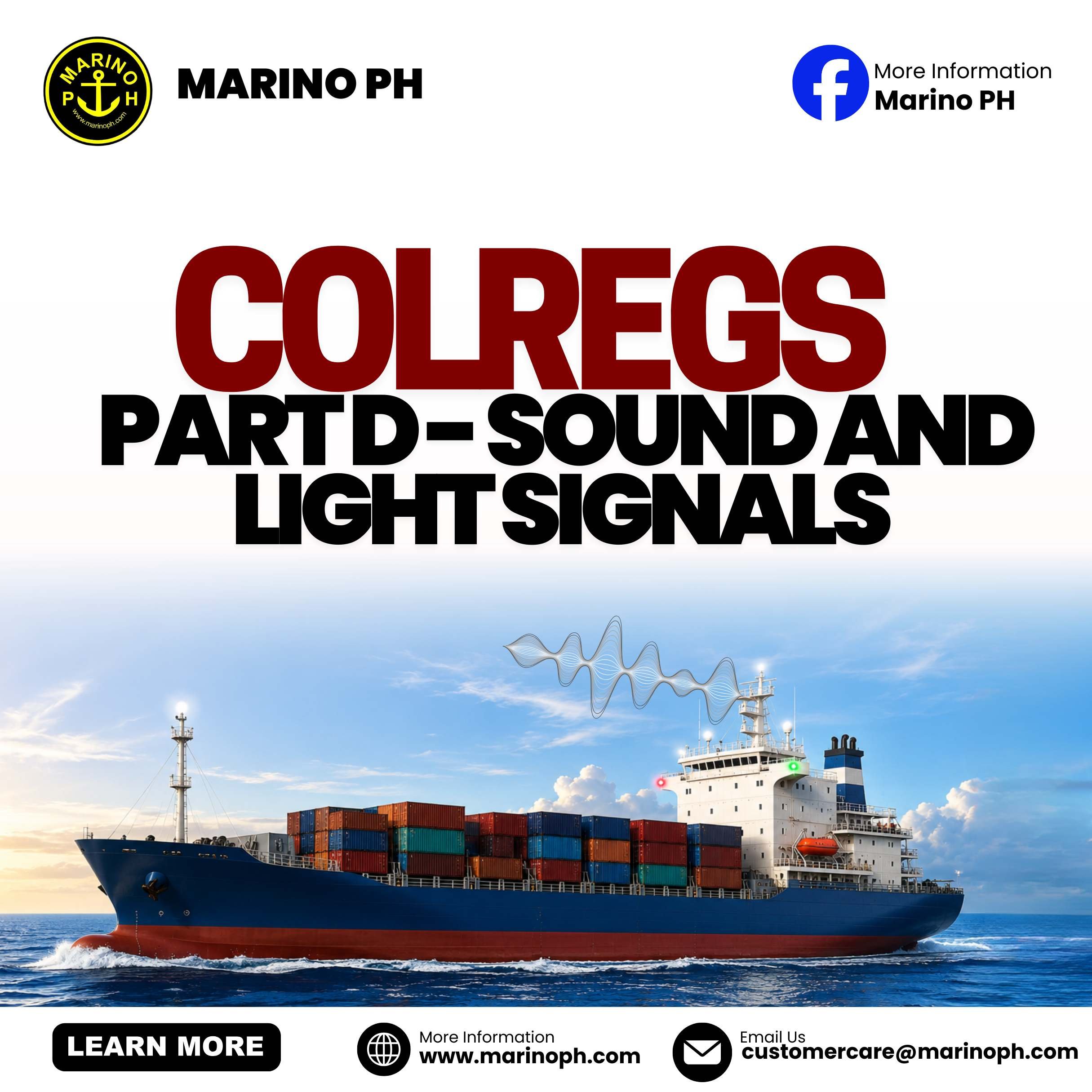
PART D – SOUND AND LIGHT SIGNALS
Rule 32 – Definitions
Defines whistle, short blast, prolonged blast, and other terms relating to sound signals.
Rule 33 – Equipment for Sound Signals
Specifies the whistle, bell, and gong equipment vessels must carry according to their length.
Rule 34 – Maneuvering and Warning Signals
Prescribes whistle signals used when altering course, operating astern propulsion, overtaking, and in situations requiring warning.
Rule 35 – Sound Signals in Restricted Visibility
Specifies fog signals for vessels underway, stopped, at anchor, aground, towing, fishing, NUC, RAM, and other special operations.
Rule 36 – Signals to Attract Attention
Allows vessels to use lights or sound signals to attract attention if necessary, provided they cannot be mistaken for authorized signals.
Rule 37 – Distress Signals
A vessel in distress may use internationally recognized distress signals to request immediate assistance.
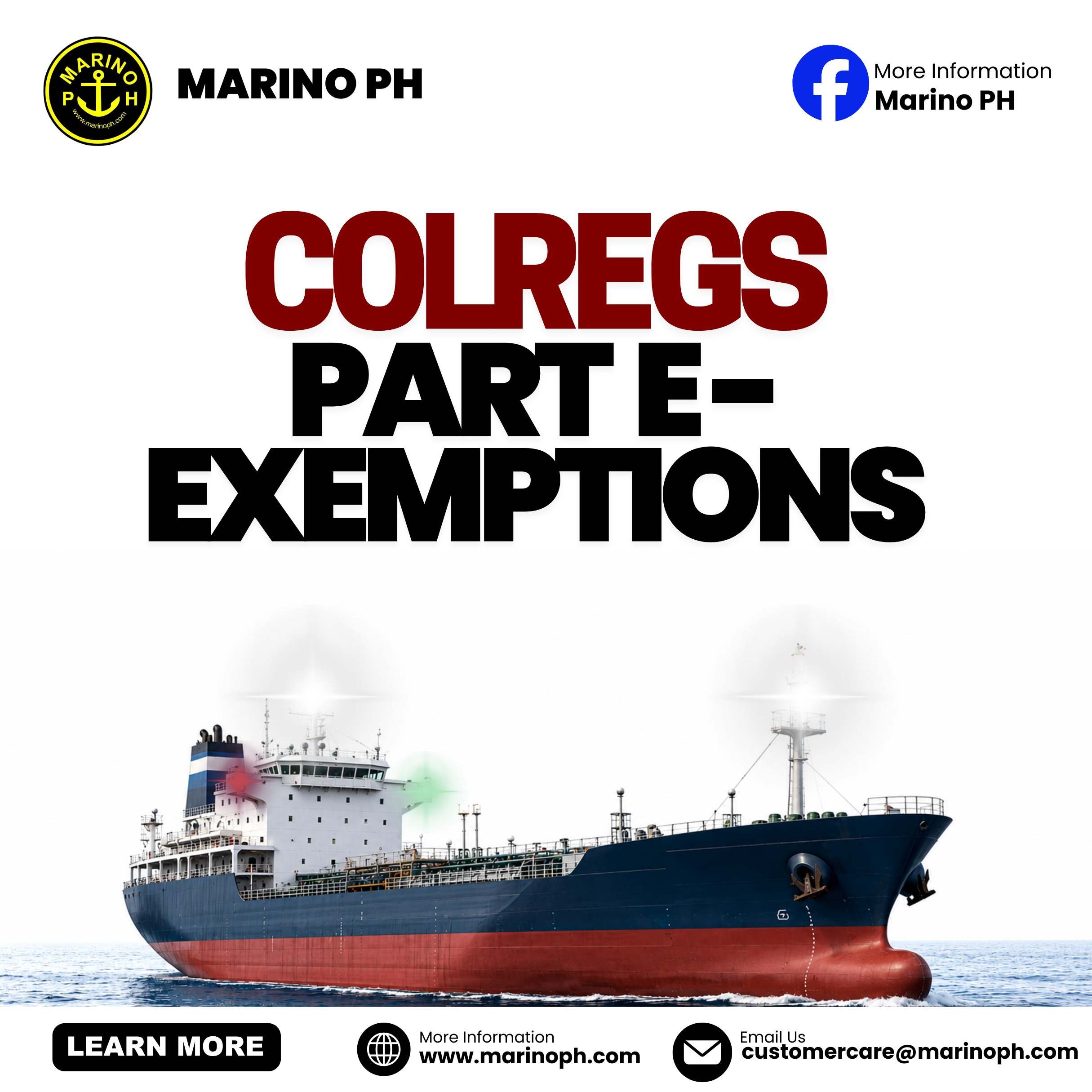
PART E – EXEMPTIONS
Rule 38 – Exemptions
Provides exemptions for certain vessels regarding the fitting and arrangement of lights, shapes, and sound-signaling equipment where compliance is impracticable due to construction or date of build.
COLREGs Part F – Verification of Compliance with the Provisions of the Convention
Rule 39 – Definitions
Defines the terms used in Part F, including:
Audit – A systematic, independent examination to determine compliance.
Audit Scheme – The IMO Member State Audit Scheme.
Code for Implementation – The IMO Instruments Implementation Code (III Code).
Rule 40 – Application
Requires every Contracting Government to:
Use the IMO Instruments Implementation Code (III Code) when carrying out its obligations under the Convention.
Implement and enforce the COLREGs in accordance with internationally agreed standards.
Rule 41 – Verification of Compliance
Provides that:
Every Contracting Government is subject to periodic audits by the IMO.
The audits verify whether the government is effectively implementing and enforcing the Convention.
The audit process follows the procedures adopted by the IMO.
