MARINO PH
Your Maritime Digital Hub

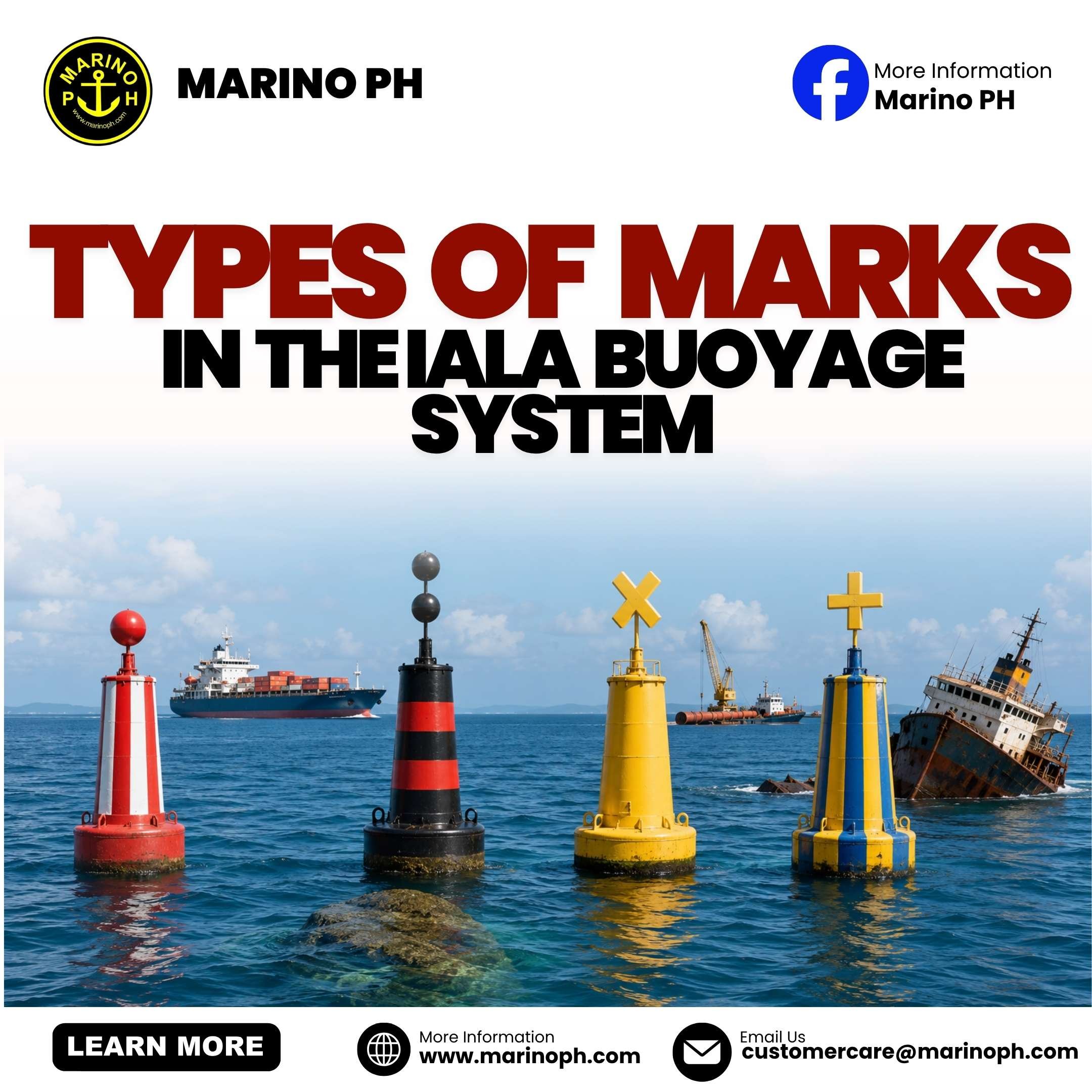
The International Association of Marine Aids to Navigation and Lighthouse Authorities (IALA) Buoyage System is an internationally recognized navigation system designed to help mariners navigate safely through coastal and inland waters. It standardizes the use of buoys, beacons, lights, and other navigational aids to indicate safe routes, hazards, and special areas. Although IALA operates under two buoyage regions (Region A and Region B), the system uses the same types of navigational marks worldwide, ensuring consistency and improving maritime safety.
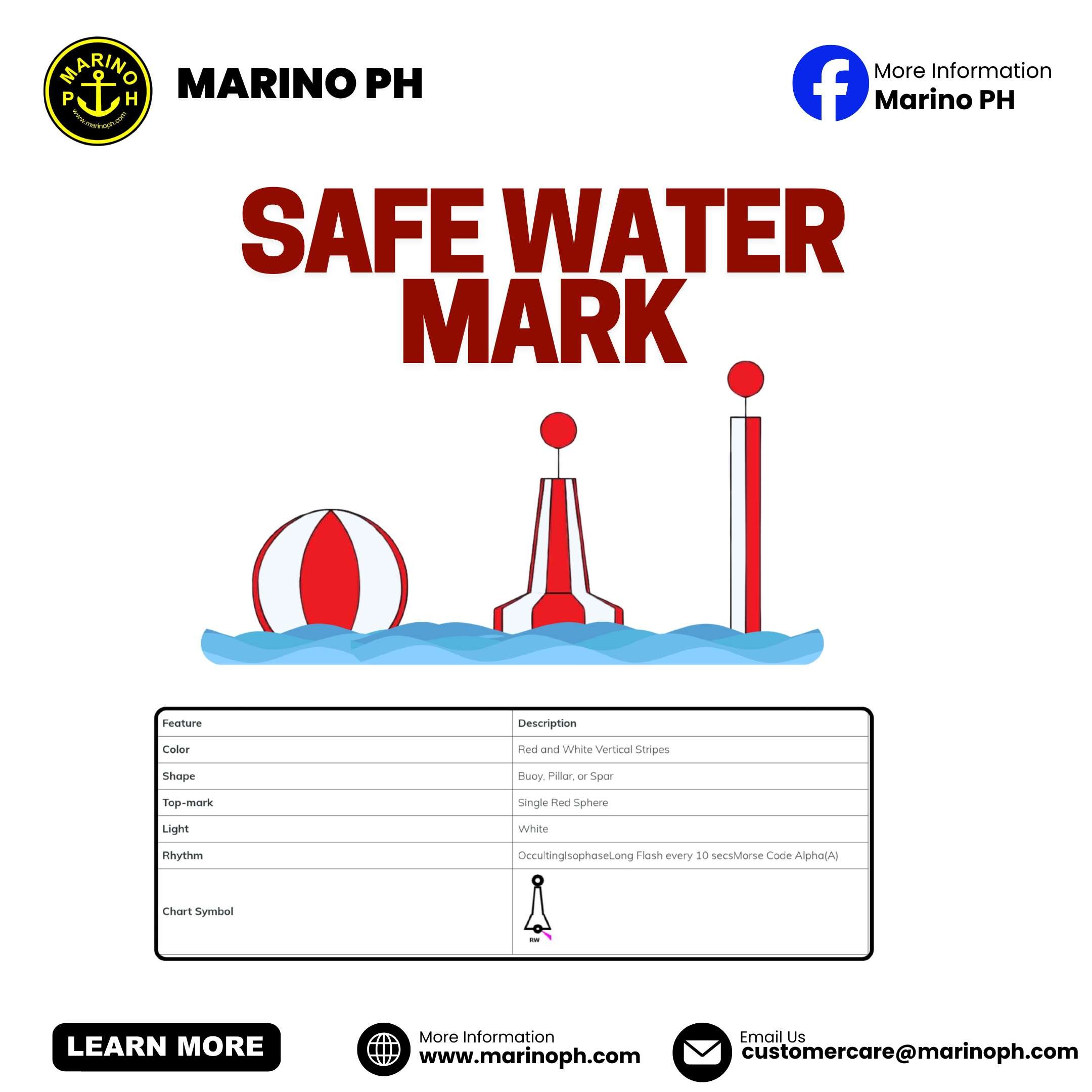
The Safe Water Mark indicates that there is safe navigable water all around the mark. It is commonly used as a landfall mark, fairway mark, or mid-channel marker to guide vessels safely into or through a channel. It is easily identified by its red and white vertical stripes, a single red sphere as its topmark, and a white light displaying Isophase (Iso), Occulting (Oc), Long Flash (LFl), or Morse Code "A".
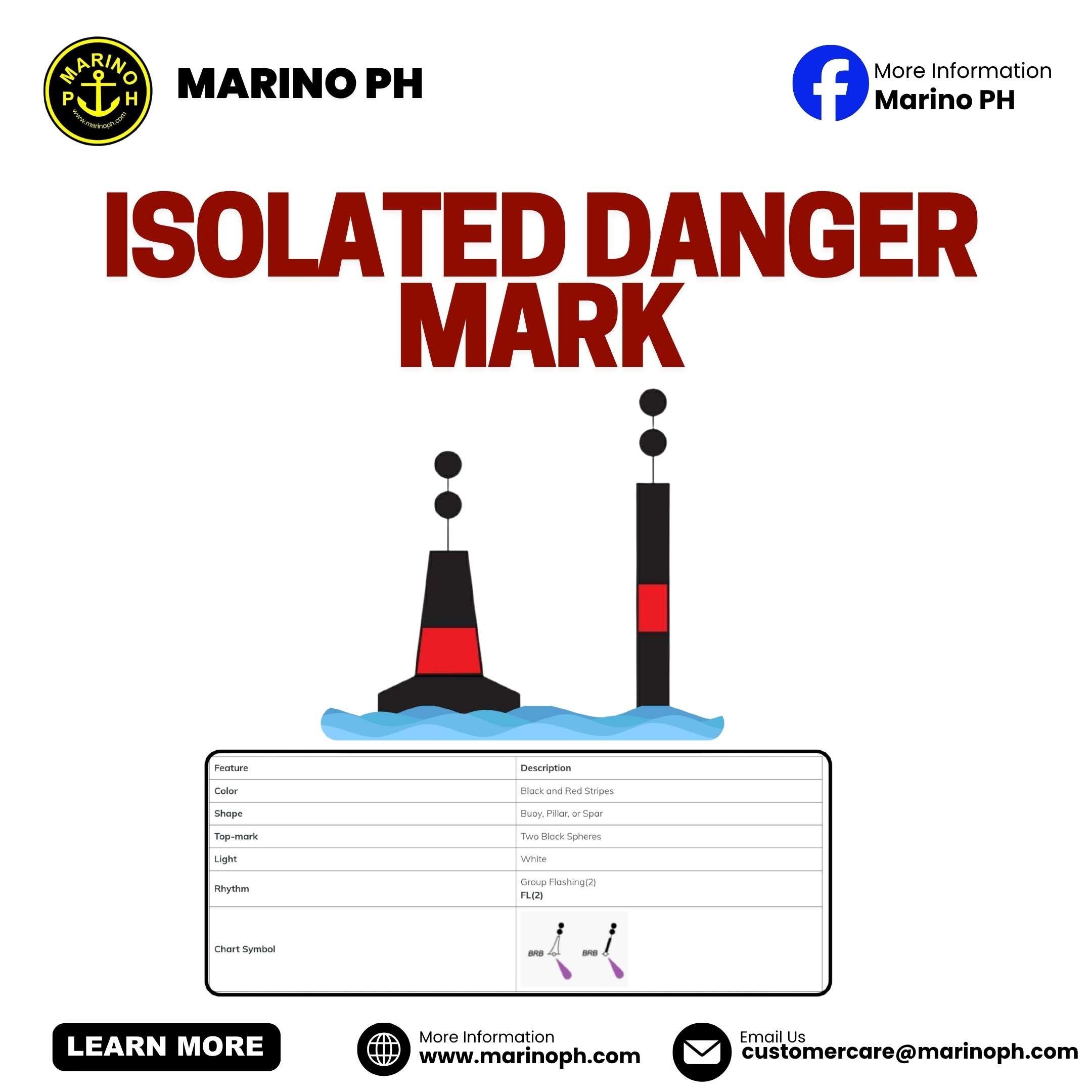
The Isolated Danger Mark is used to identify a specific hazard, such as a submerged rock, shoal, or wreck, that has safe water surrounding it. Mariners should avoid the marked danger while recognizing that navigation is safe outside the immediate vicinity. This mark features a black body with one or more red horizontal bands, two black spheres as its topmark, and a white Group Flashing (2) light [Fl(2)], making it readily distinguishable at night.
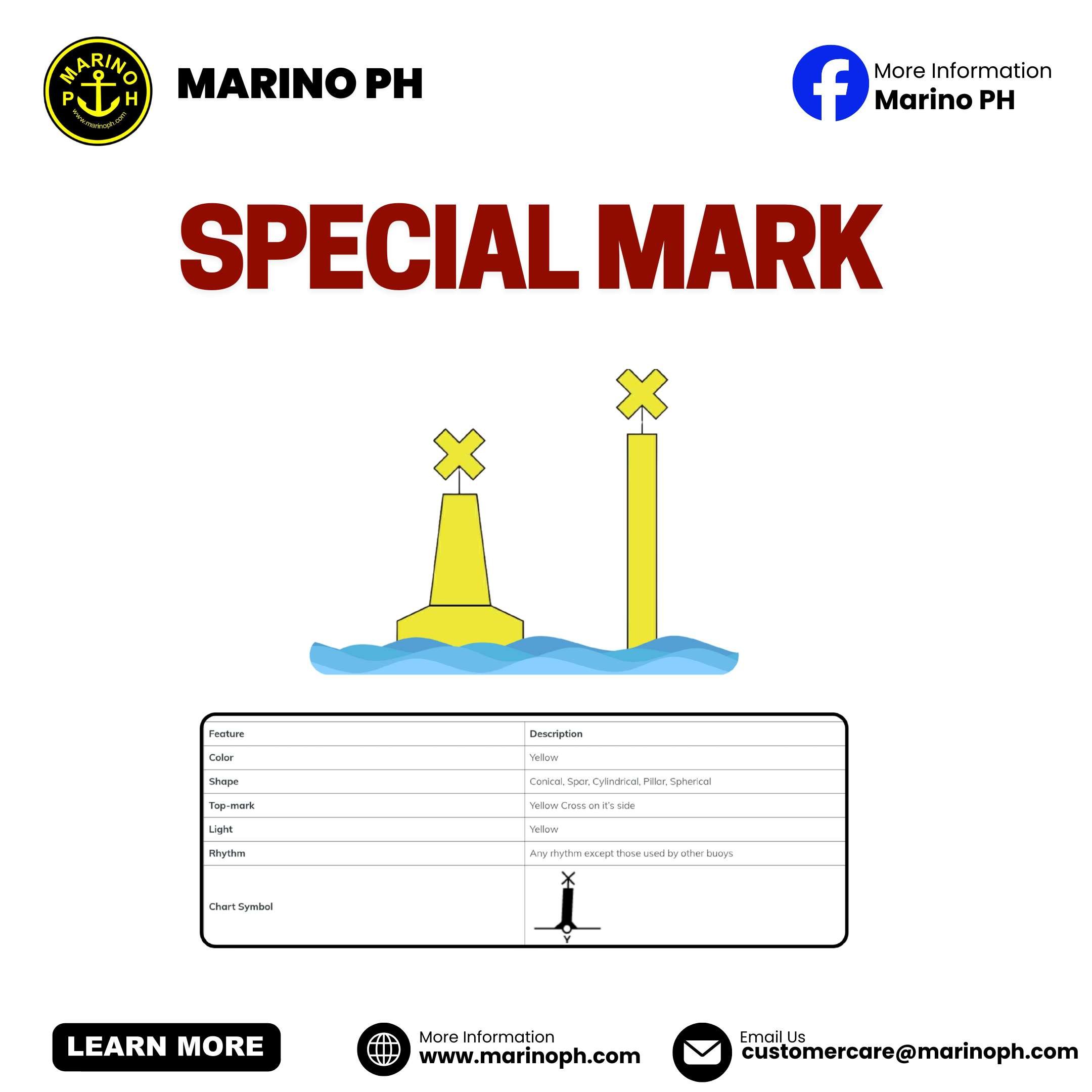
The Special Mark identifies areas or features that serve a specific purpose rather than indicating navigational hazards. These may include anchorages, submarine cable or pipeline routes, military exercise areas, recreation zones, or traffic separation schemes. It is colored yellow, carries a yellow "X" (St. Andrew\'s Cross) as its topmark, and displays a yellow light with any rhythm that does not conflict with the light characteristics of other navigational marks.
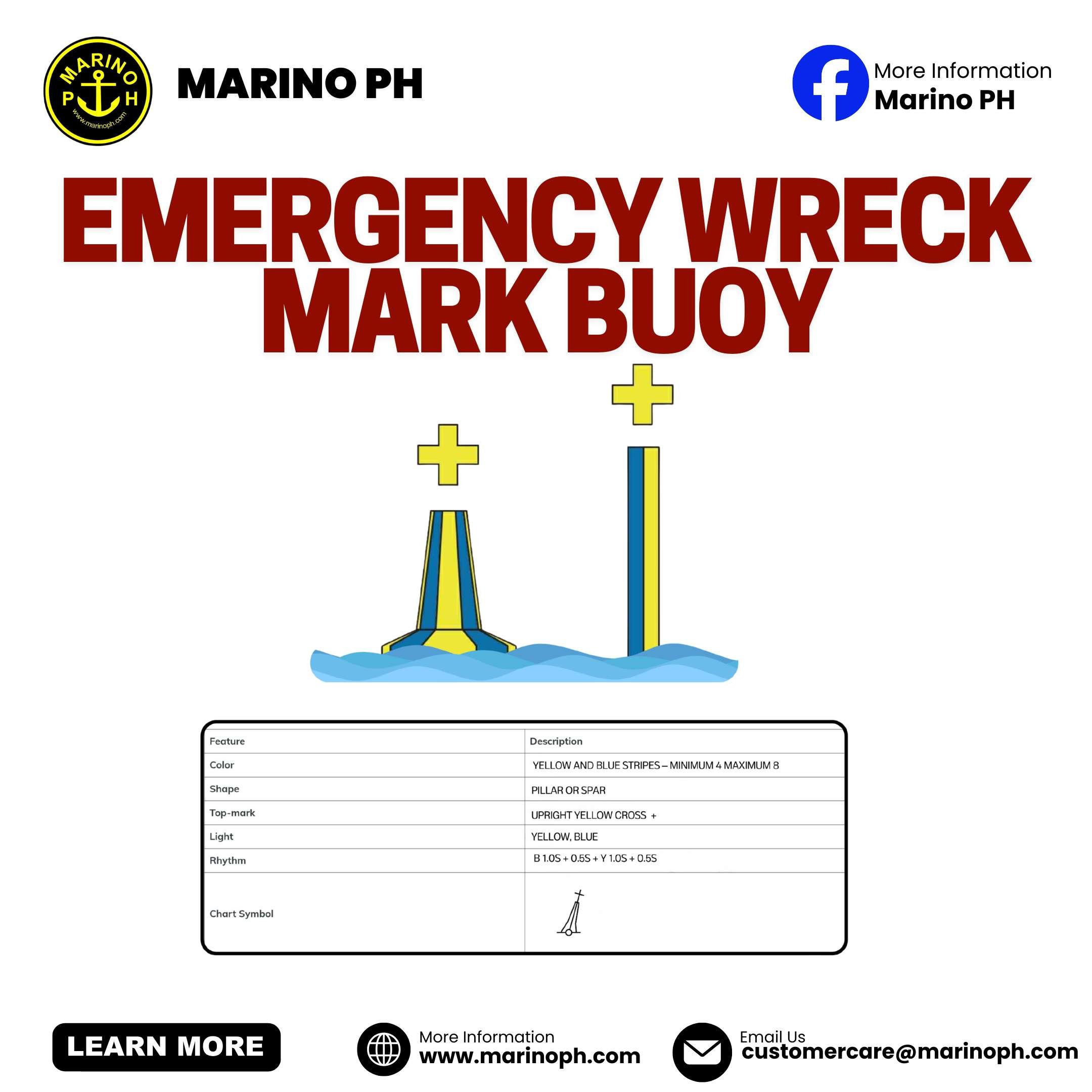
The Emergency Wreck Marking Buoy is a temporary buoy deployed to warn mariners of a newly discovered wreck or obstruction that presents a serious danger to navigation until permanent marking can be established. It is distinguished by equal blue and yellow vertical stripes, an upright yellow cross (+) as its topmark, and an alternating blue and yellow flashing light with a 3-second period (Al.Bu.Y.3s). This unique appearance allows mariners to quickly recognize the presence of an emergency hazard requiring immediate caution.
