
MARINO PH
Your Maritime Digital Hub

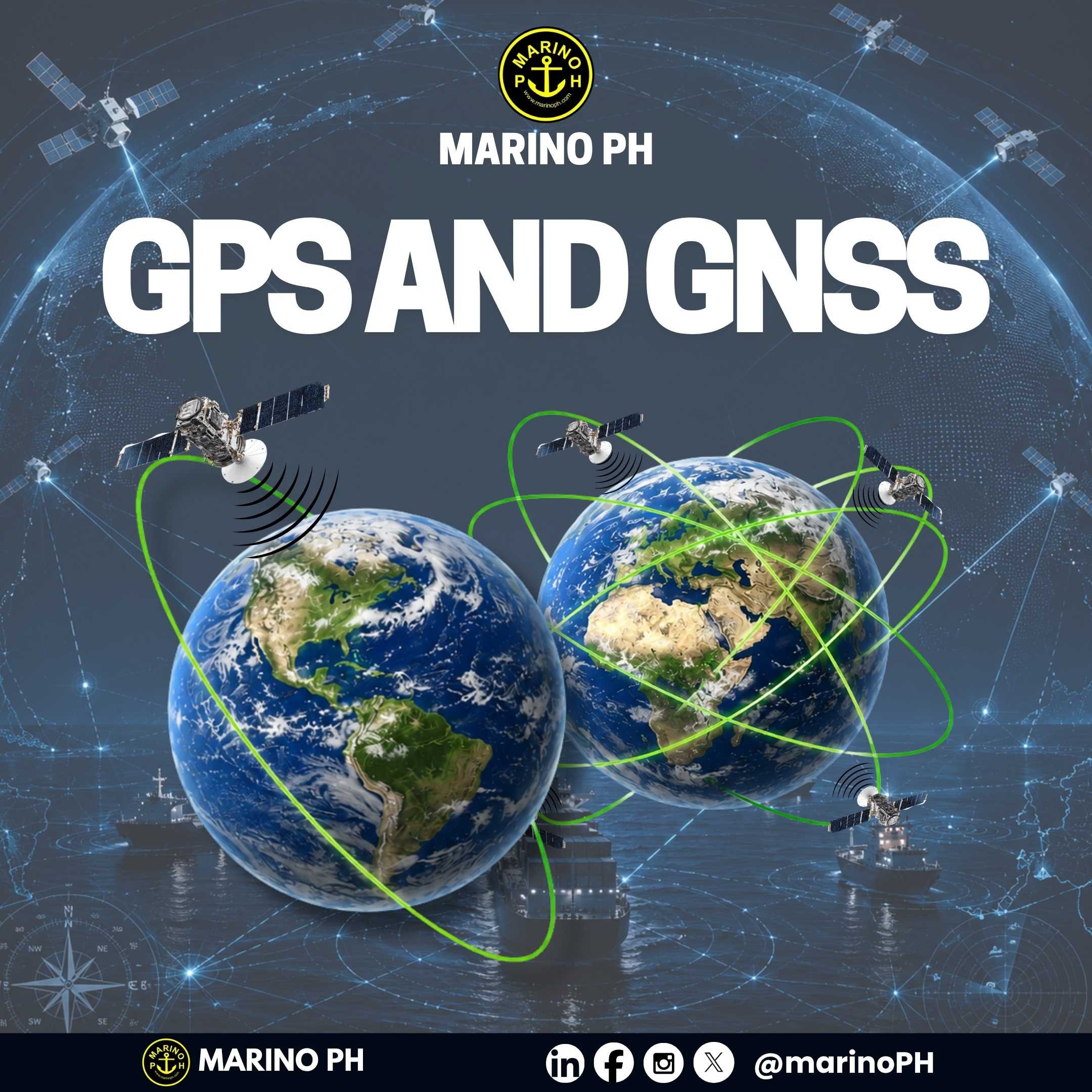
Many people use the terms GPS and GNSS interchangeably, but they are not exactly the same. GPS (Global Positioning System) is a satellite navigation system developed by the United States, while GNSS (Global Navigation Satellite System) is the general term for all global satellite navigation systems, including GPS, Russia\'s GLONASS, Europe\'s Galileo, and China\'s BeiDou.
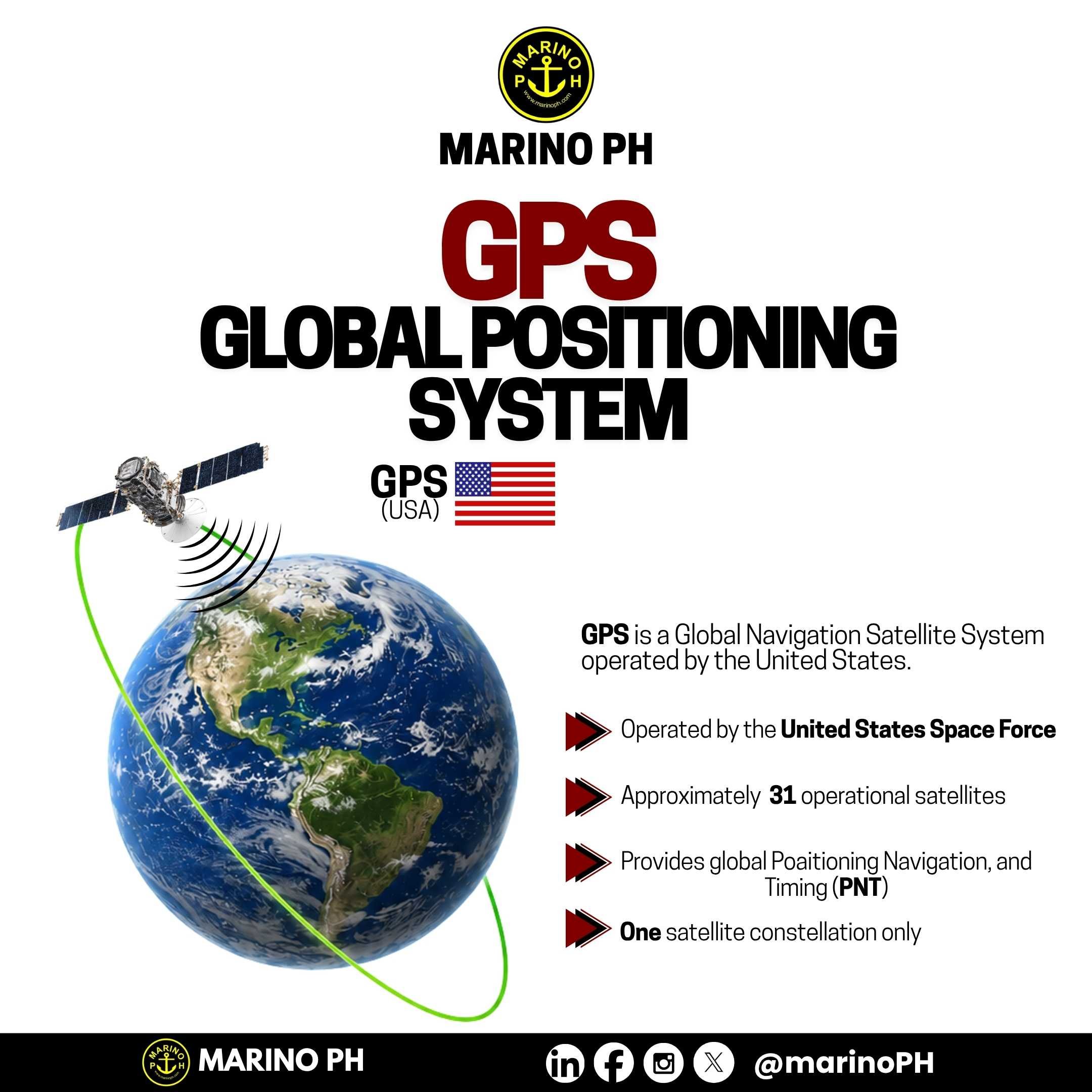
GPS (Global Positioning System)
GPS is a satellite-based navigation system developed by the United States. It provides accurate positioning, navigation, and timing information by using a network of satellites orbiting the Earth. In the maritime industry, GPS helps seafarers determine a vessel\'s exact position, monitor routes, and navigate safely in all weather conditions.
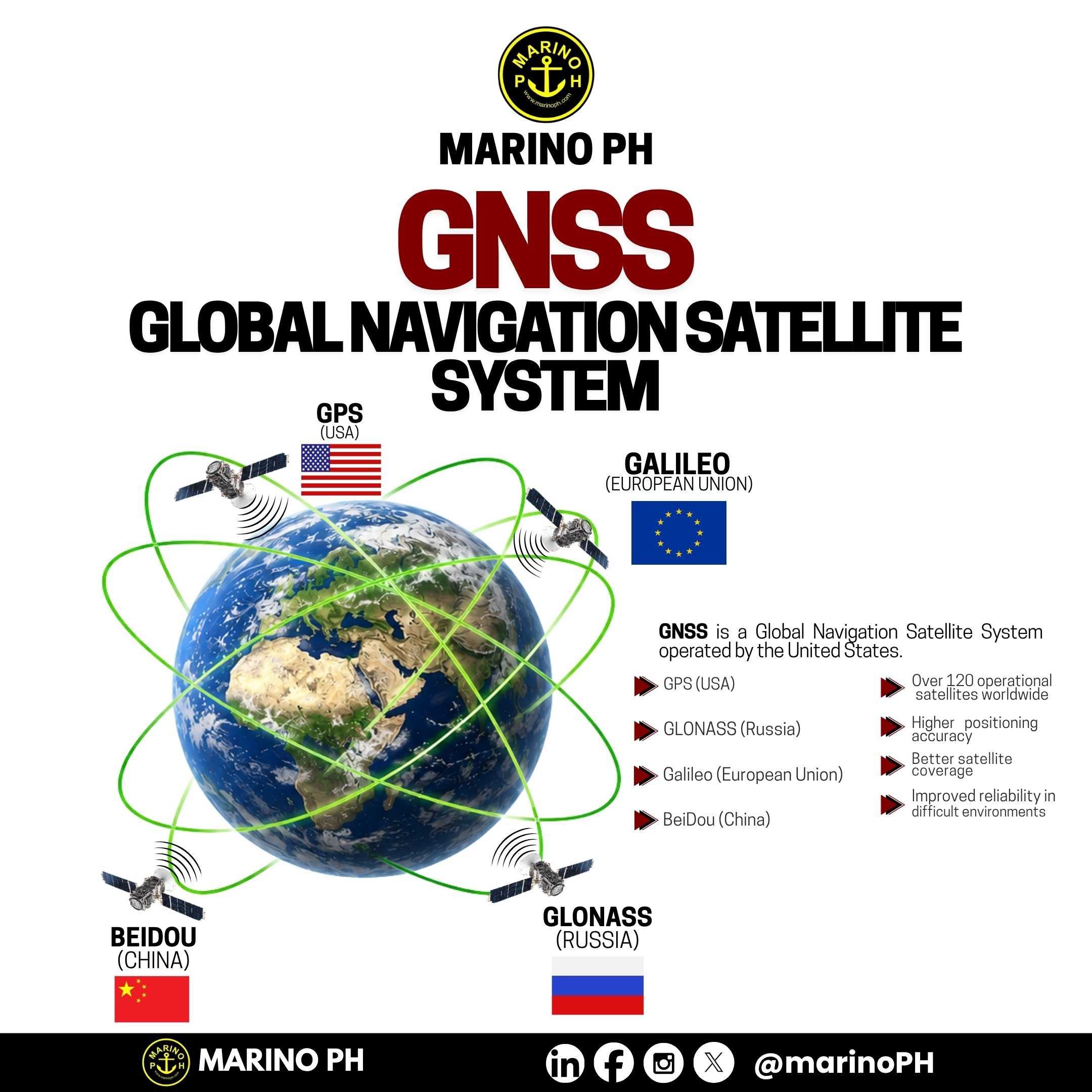
GNSS (Global Navigation Satellite System)
GNSS is the collective term for all global satellite navigation systems, including GPS (United States), GLONASS (Russia), Galileo (European Union), and BeiDou (China). By using signals from multiple satellite constellations, GNSS provides greater accuracy, improved reliability, and better coverage, making it the preferred navigation technology for modern maritime operations.

ADVERTISEMENT
Why It Matters to Seafarers
Modern ships rely on GNSS receivers to obtain precise position, speed, and time information for safe navigation, route planning, collision avoidance, and electronic chart systems. Understanding the difference between GPS and GNSS helps seafarers appreciate the technology that supports safer and more efficient voyages around the world.
