MARINO PH
Your Maritime Digital Hub

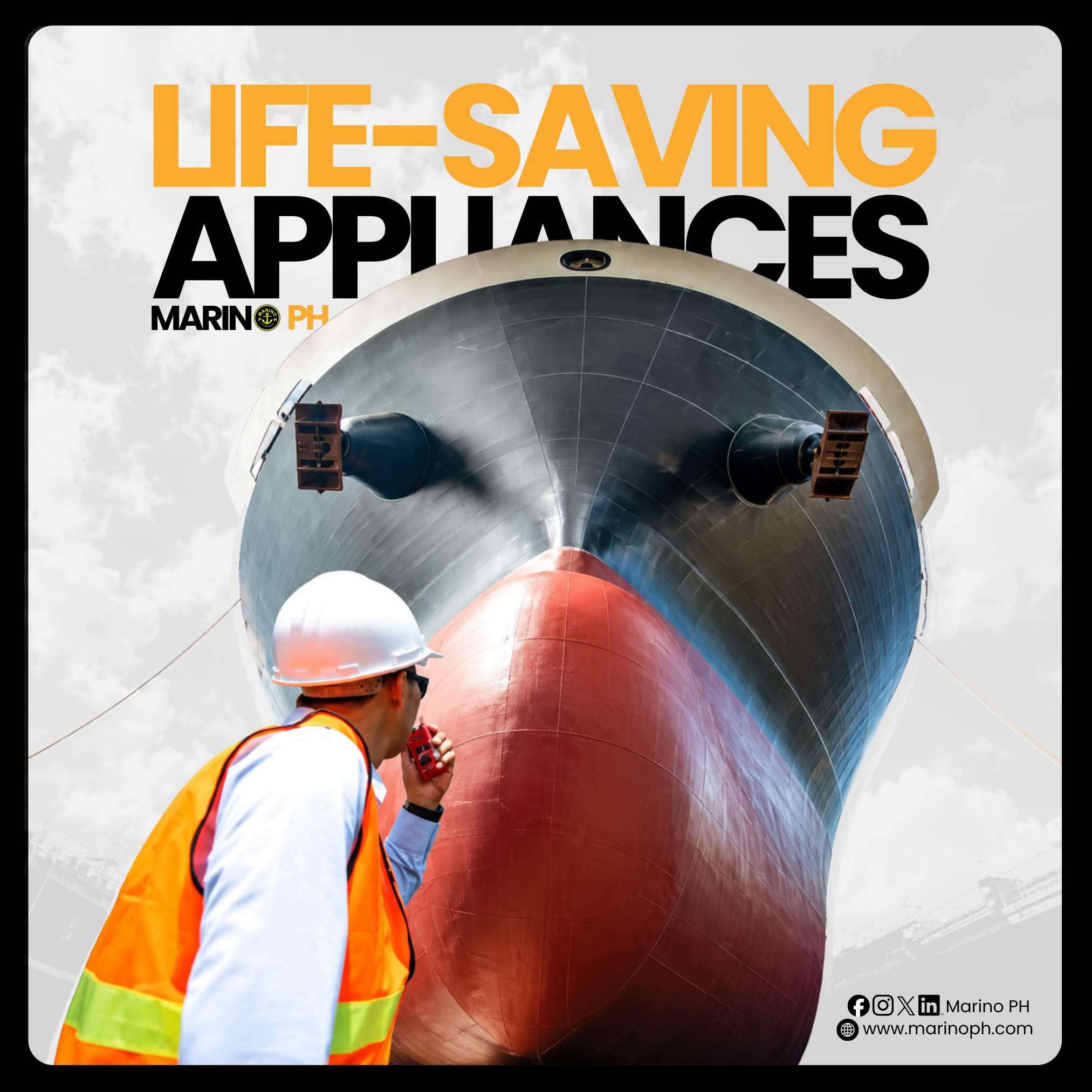
The Life-Saving Appliances (LSA) Code is part of the SOLAS Convention. It provides detailed requirements for the design, construction, performance, and maintenance of life-saving equipment carried on board ships, such as lifeboats, life jackets, liferafts, and distress signals. Every seafarer should be familiar with these appliances to ensure a safe and effective response during emergencies.
PERSONAL LIFE-SAVING APPLIANCES
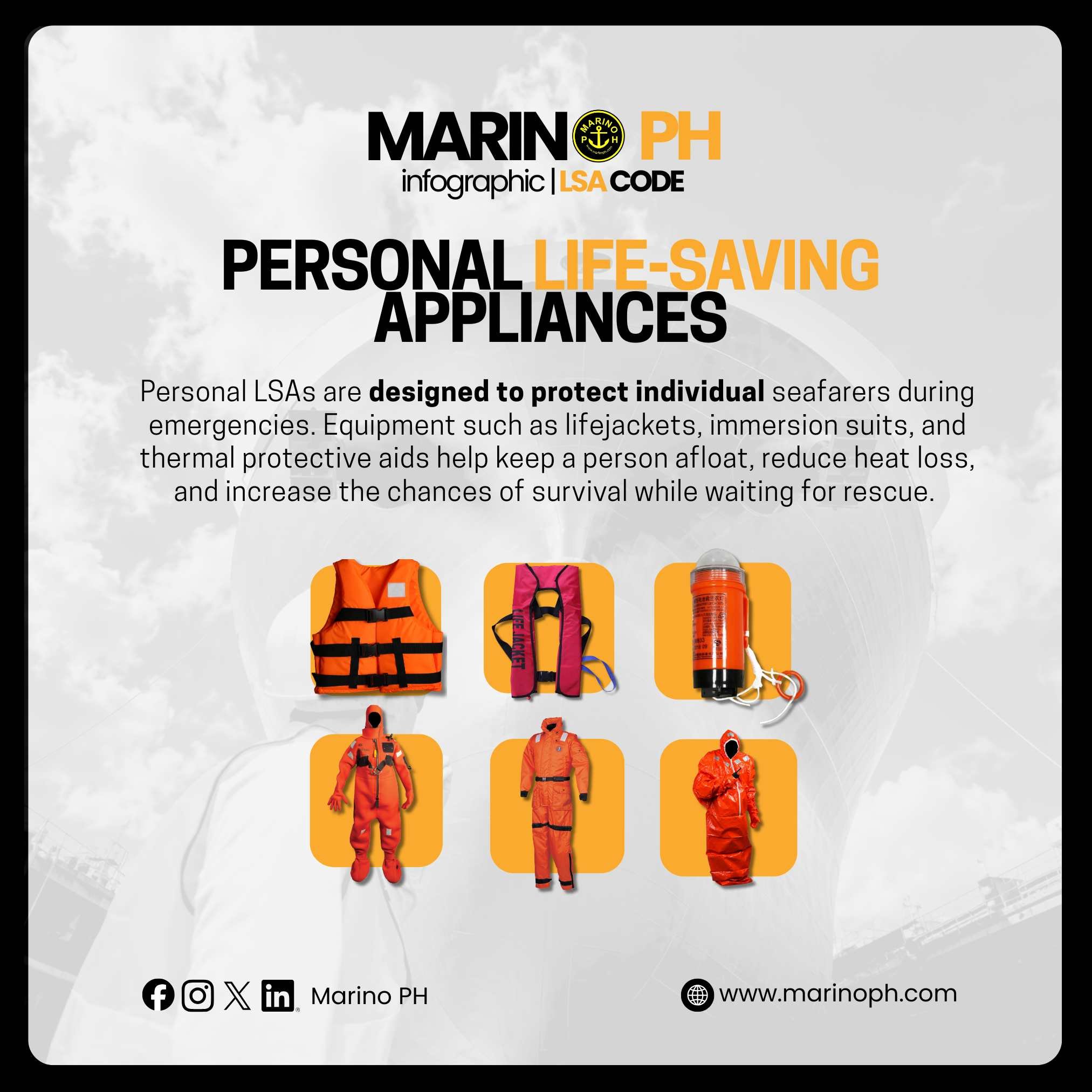
Personal LSAs are designed to protect individual seafarers during emergencies. Equipment such as lifejackets, immersion suits, and thermal protective aids help keep a person afloat, reduce heat loss, and increase the chances of survival while waiting for rescue.
Life Jacket
A life jacket keeps the wearer safely afloat and helps turn an unconscious person face-up. It is designed for quick donning and effective buoyancy during emergencies. Every SOLAS-approved life jacket must provide adequate flotation and include essential safety accessories.
Inflatable Life Jacket
An inflatable life jacket provides buoyancy through inflatable air chambers. It automatically inflates upon immersion and also includes manual and oral inflation systems for additional safety.
Life Jacket Light
A life jacket light is attached to a life jacket to improve the visibility of survivors during darkness, making them easier to locate by rescue teams.
Immersion Suit
An immersion suit is a waterproof suit designed to protect seafarers from cold water by reducing body heat loss. It helps delay hypothermia and improves survival while waiting for rescue. The suit covers almost the entire body and allows the wearer to swim and board a survival craft safely.
Anti-Exposure Suit
An anti-exposure suit protects rescue boat crews from cold temperatures and excessive heat loss while allowing sufficient mobility to conduct rescue operations safely.
Thermal Protective Aid (TPA)
A Thermal Protective Aid (TPA) is a waterproof protective covering used inside survival craft or rescue boats to minimize body heat loss and protect survivors from hypothermia after abandoning ship.
BUOYANT APPLIANCES
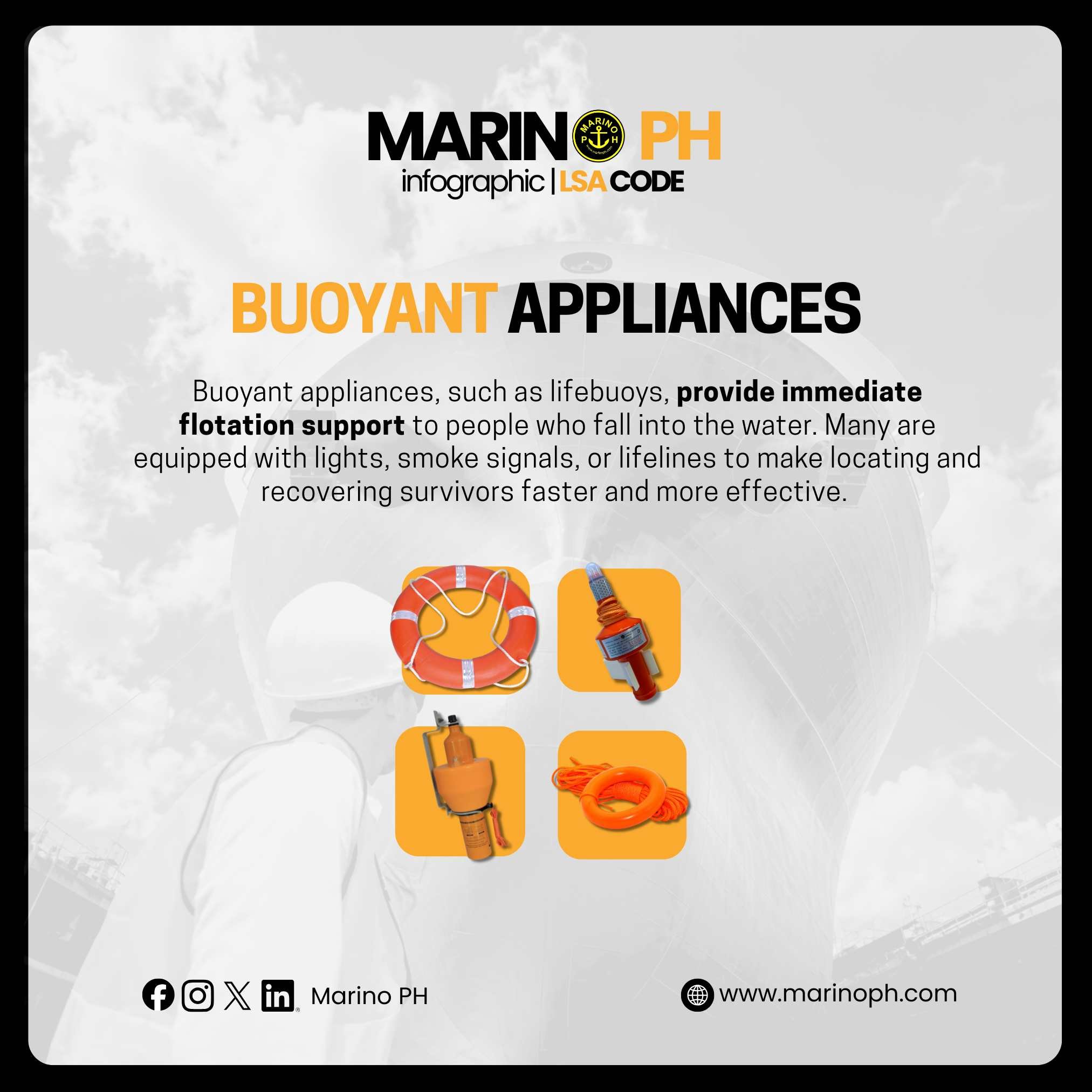
Buoyant appliances, such as lifebuoys, provide immediate flotation support to people who fall into the water. Many are equipped with lights, smoke signals, or lifelines to make locating and recovering survivors faster and more effective.
Lifebuoy
A lifebuoy provides immediate flotation to a person who falls overboard. It is made from inherently buoyant material and is designed to remain effective even in harsh marine conditions. Some lifebuoys are fitted with self-igniting lights and smoke signals to improve visibility during rescue operations.
Self-Igniting Light
A self-igniting light is attached to a lifebuoy to improve the visibility of a person overboard during darkness or poor weather. It automatically activates upon contact with water and helps rescuers quickly identify the casualty\'s location.
Self-Activating Smoke Signal
A self-activating smoke signal is mounted on a lifebuoy to produce highly visible colored smoke during daylight, enabling rescuers to locate a person overboard from a considerable distance.
Buoyant Lifeline
A buoyant lifeline is a floating rope attached to a lifebuoy, allowing rescuers or survivors to pull the lifebuoy toward a casualty or recover them from the water.
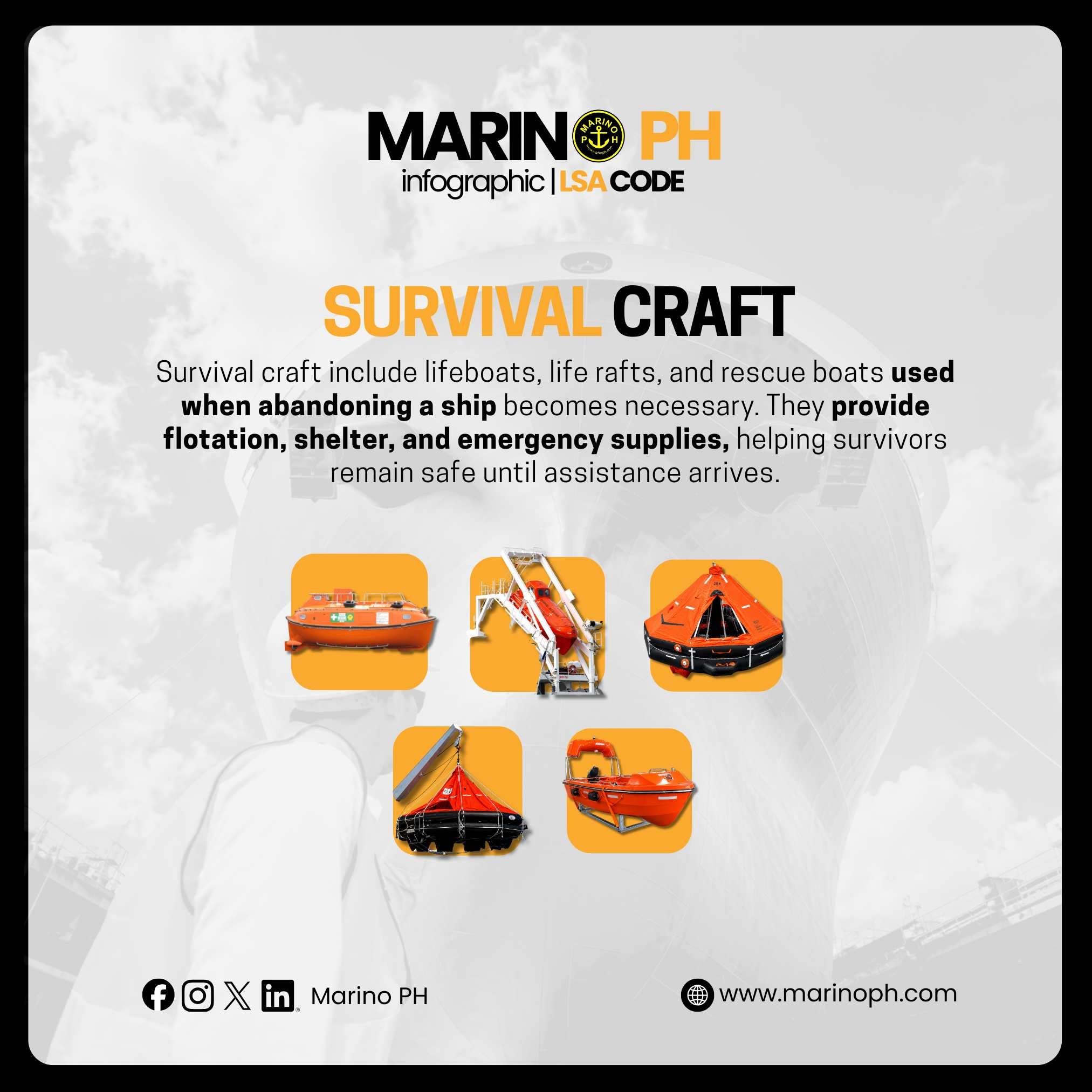
SURVIVAL CRAFT
Survival craft include lifeboats, liferafts, and rescue boats used when abandoning a ship becomes necessary. They provide flotation, shelter, and emergency supplies, helping survivors remain safe until assistance arrives.
Lifeboat
A lifeboat is a rigid survival craft designed to safely evacuate passengers and crew from a ship during emergencies. It is constructed to remain stable, buoyant, and seaworthy while carrying its full complement of people and survival equipment until rescue arrives.
Free-Fall Lifeboat
A free-fall lifeboat is a fully enclosed lifeboat launched by sliding down an inclined ramp directly into the sea. It provides rapid evacuation from vessels operating in hazardous environments such as tankers, offshore platforms, and gas carriers.
Liferaft
A liferaft is an inflatable survival craft that automatically inflates when launched into the water. It provides temporary shelter, flotation, and survival support for passengers and crew after abandoning ship until rescue is available.
Rescue Boat
A rescue boat is a fast and highly maneuverable craft used to recover persons from the water, assist survival craft, and conduct rescue operations during emergencies. It may be of rigid, inflatable, or combined construction.
Davit-Launched Liferaft
A davit-launched liferaft is an inflatable liferaft specifically designed to be launched using a ship\'s davit. It enables crew and passengers to board the raft safely before it is lowered into the water, especially on passenger ships.
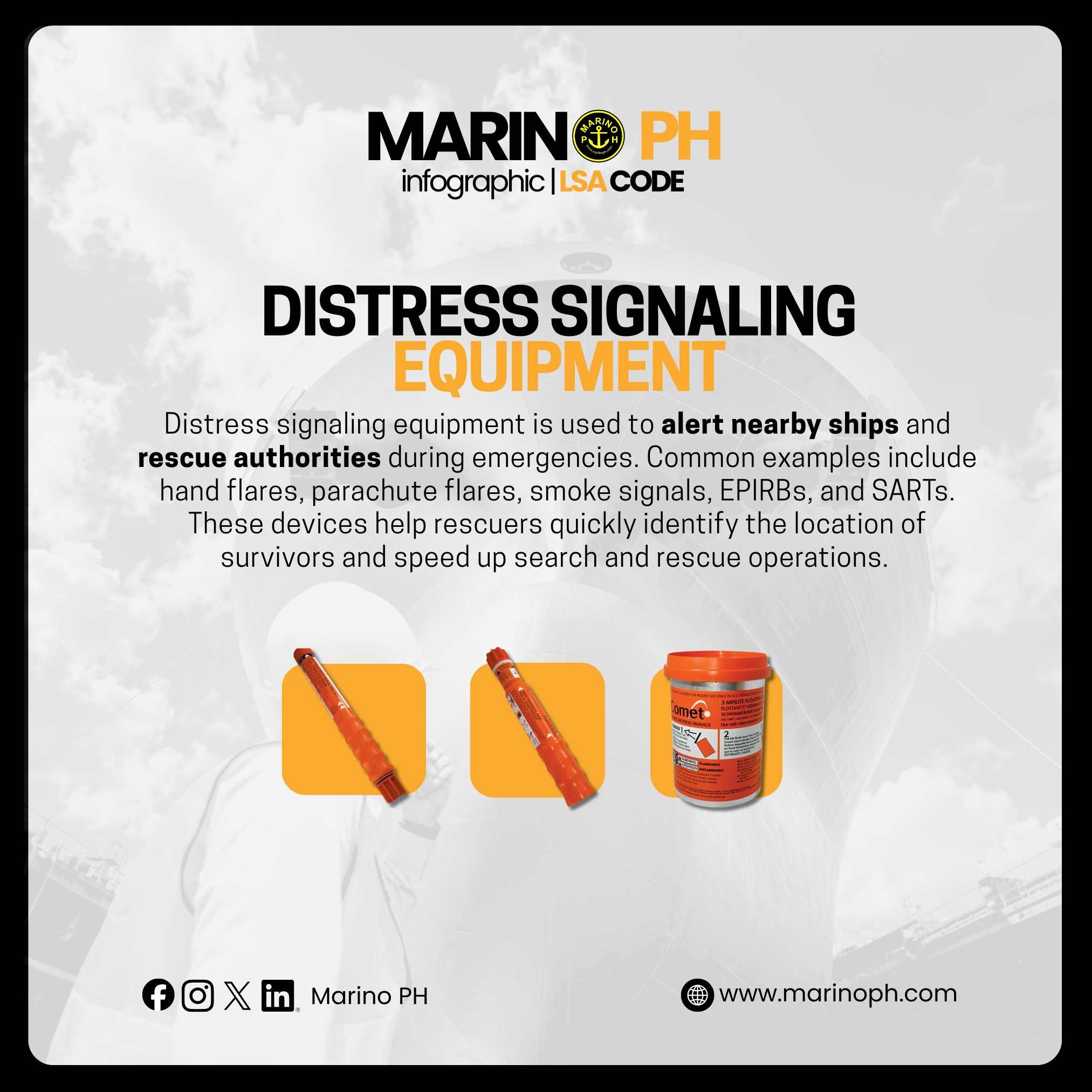
DISTRESS SIGNALING EQUIPMENT
Distress signaling equipment is used to alert nearby ships and rescue authorities during emergencies. Common examples include hand flares, rocket parachute flares, buoyant smoke signals, EPIRBs, and SARTs. These devices help rescuers quickly identify the location of survivors and speed up search and rescue operations.
Rocket Parachute Flare
A rocket parachute flare is a distress signal used to attract the attention of nearby ships or aircraft during emergencies. It launches a bright red flare high into the sky, where it descends slowly under a parachute, making it visible over long distances, especially at night.
Hand Flare
A hand flare is a handheld pyrotechnic distress signal that produces a bright red flame to indicate the location of survivors during emergencies, particularly at night or in restricted visibility.
Buoyant Smoke Signal
A buoyant smoke signal is a floating daytime distress signal that emits dense colored smoke to mark the location of survivors or a person overboard, making them easier to locate by rescue units.
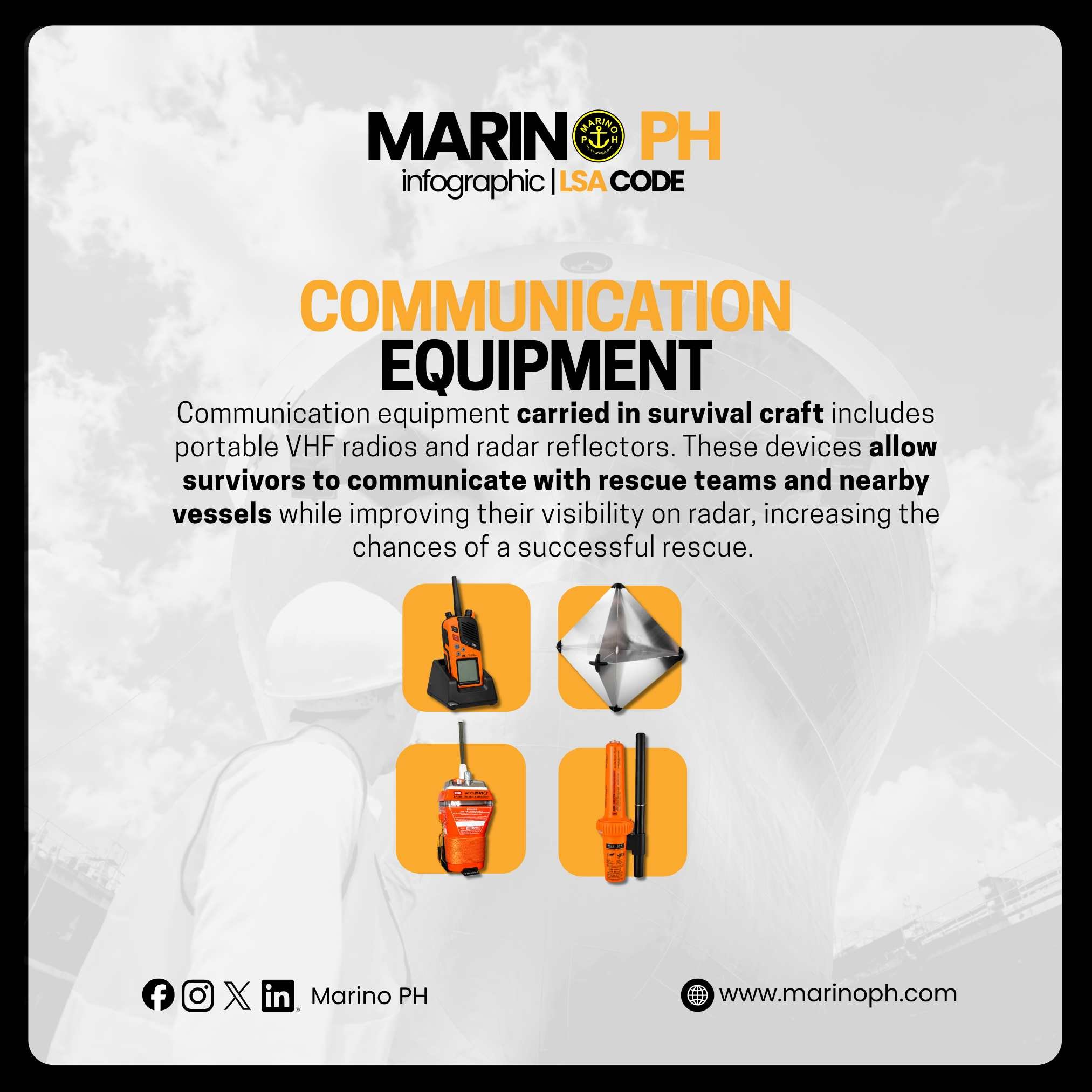
COMMUNICATION EQUIPMENT
Communication equipment carried in survival craft includes portable VHF radios and radar reflectors. These devices allow survivors to communicate with rescue teams and nearby vessels while improving their visibility on radar, increasing the chances of a successful rescue.
Portable Two-Way VHF Radio
A portable two-way VHF radio is a battery-powered communication device carried in survival craft to establish voice communication with nearby ships, rescue boats, helicopters, and search and rescue authorities. It enables survivors to report their position, receive instructions, and coordinate rescue operations during maritime emergencies.
Radar Reflector
A radar reflector is a passive locating device fitted to survival craft to increase their radar visibility. It reflects radar signals transmitted by ships and aircraft, making lifeboats and liferafts easier to detect during search and rescue operations, especially in poor visibility.
Emergency Position Indicating Radio Beacon (EPIRB)
An Emergency Position Indicating Radio Beacon (EPIRB) is a distress alert device that automatically or manually transmits a distress signal and the vessel\'s position via satellite to international search and rescue authorities. It significantly reduces the time required to locate survivors after an emergency.
Search and Rescue Transponder (SART)
A Search and Rescue Transponder (SART) is a locating device carried in survival craft that responds to radar signals from searching ships by transmitting a series of radar echoes. This enables rescuers to accurately locate lifeboats and liferafts during search and rescue operations.

Conclusion
Life-saving appliances are essential safety equipment designed to protect lives during maritime emergencies. Every seafarer must understand the purpose and proper use of personal life-saving appliances, buoyant appliances, survival craft, distress signaling equipment, and communication equipment. Familiarity with these appliances, combined with regular training and drills, improves emergency preparedness and increases the chances of survival at sea.
