MARINO PH
Your Maritime Digital Hub

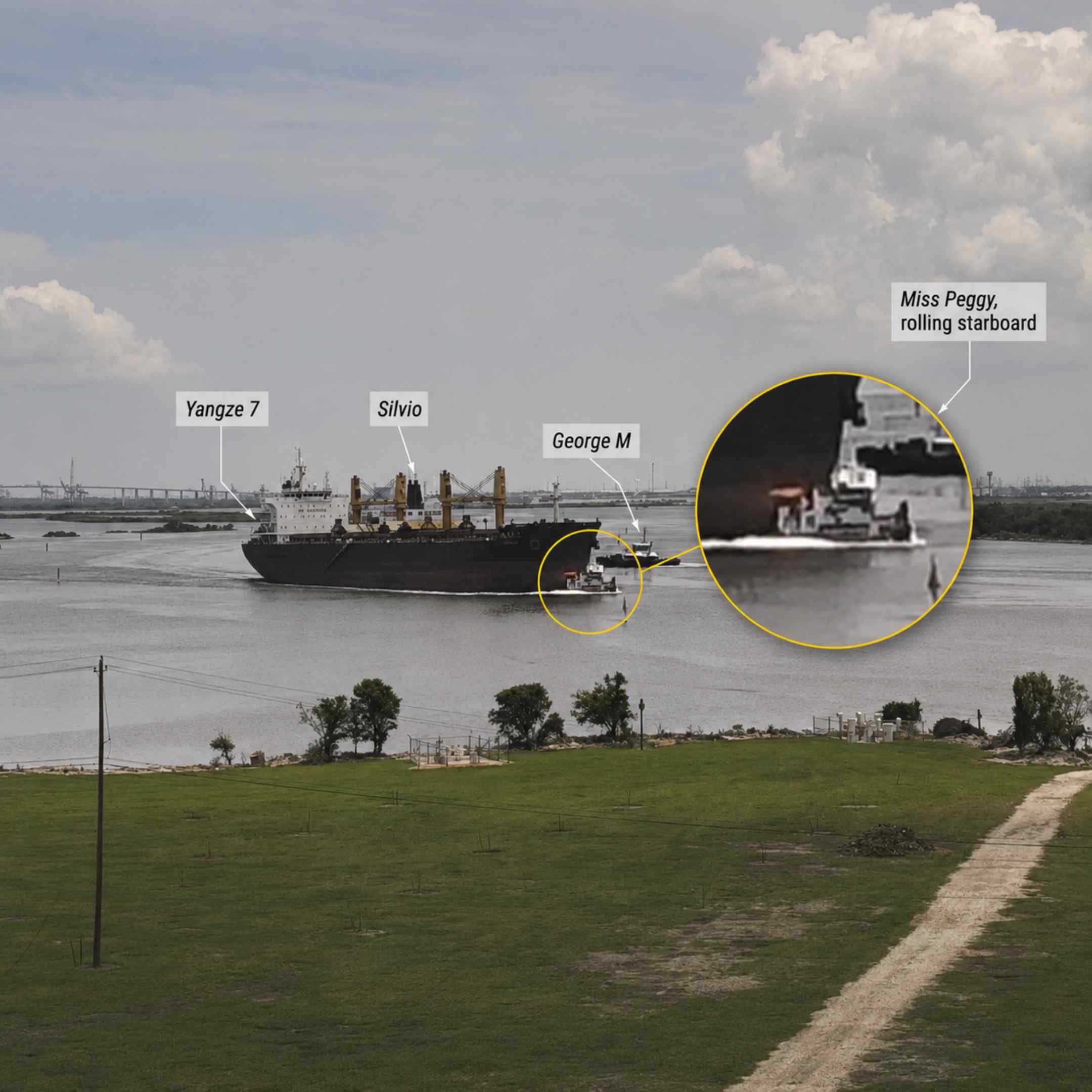
Photo Credit: NTSB/U.S. Coast Guard
The U.S. National Transportation Safety Board (NTSB) has determined that a prolonged personal phone conversation by a Houston ship pilot contributed to the fatal collision between the bulk carrier Yangze 7 and the towing vessel Miss Peggy in the Houston Ship Channel on July 19, 2024. The investigation found that the pilot’s distraction, combined with failures by both vessels’ bridge teams to maintain proper lookouts, led to the tragic accident.
According to the NTSB, the pilot directing the 656-foot Yangze 7 remained on a non-operational personal cell phone call for approximately 39 minutes before the collision. Although the conversation ended just over two minutes before impact, investigators concluded that it caused the pilot to lose situational awareness and delayed recognition of the towing vessel ahead. The bridge team aboard Yangze 7 also failed to intervene despite observing the pilot’s extended personal conversation while issuing helm orders.

ADVERTISEMENT
The collision caused the Miss Peggy to capsize and sink with five crewmembers on board. Four mariners were rescued by a nearby vessel, while one crewmember was later found deceased inside the sunken towboat. The accident also resulted in serious injuries, an oil spill into the waterway, and an estimated US$3.7 million in damages and cleanup costs. The Yangze 7 sustained no reported damage.
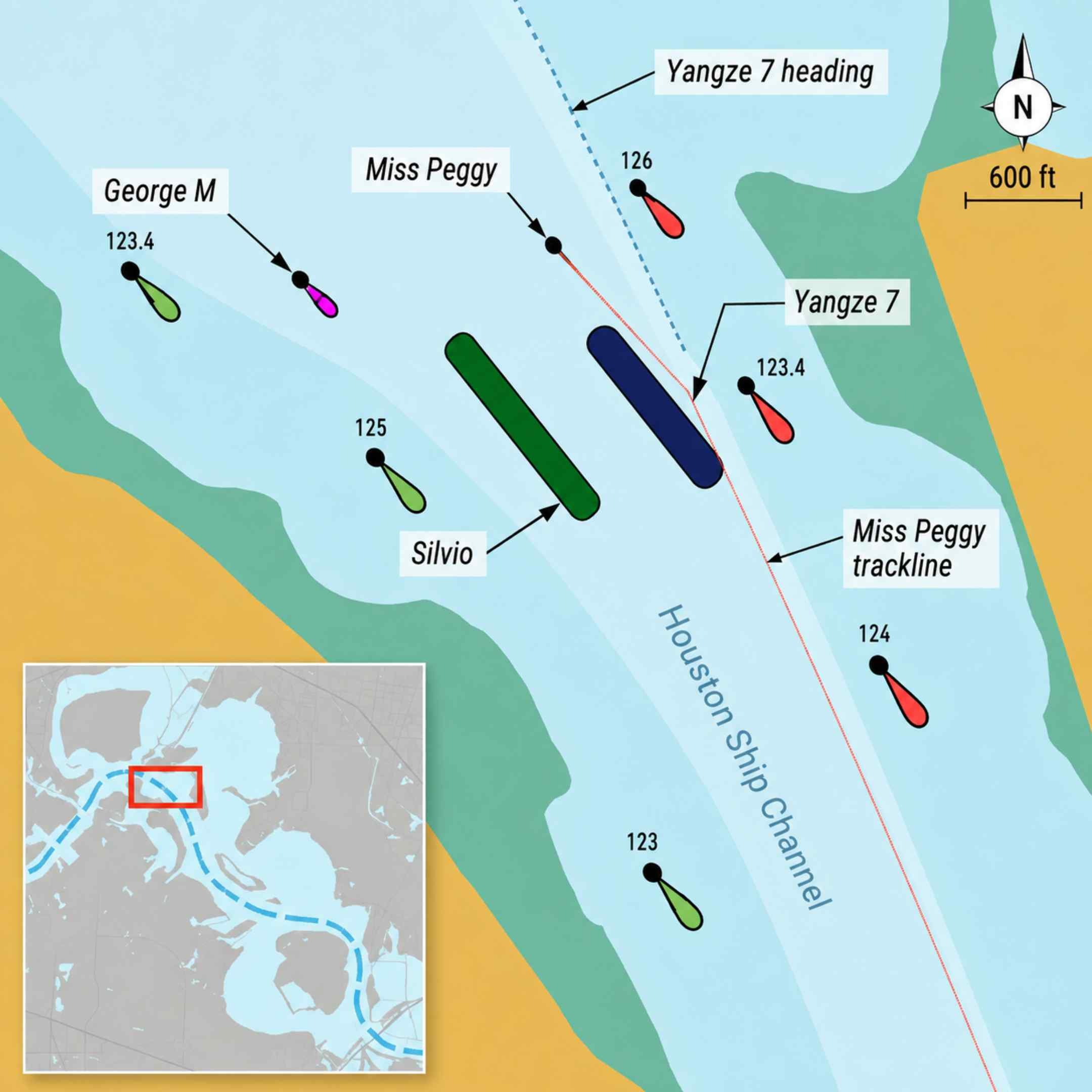
Photo Credit: The Maritime Executive
The investigation further revealed that the captain of the Miss Peggy also failed to maintain an effective lookout and did not detect the approaching bulk carrier. As a result, the NTSB concluded that the Houston pilot, the Yangze 7 bridge team, and the Miss Peggy captain all lost situational awareness due to inadequate watchkeeping.
In response, the NTSB recommended that the U.S. Coast Guard prohibit the non-operational use of personal electronic devices by individuals directing vessel movements in U.S. waterways. It also urged the American Pilots’ Association to develop guidance banning personal electronic device use while pilots are actively navigating vessels. The report noted that the absence of such policies likely contributed to the normalization of unsafe practices. The findings serve as a strong reminder that maintaining a proper lookout, effective bridge resource management, and eliminating unnecessary distractions remain essential to ensuring safe navigation and protecting lives at sea.
