
MARINO PH
Your Maritime Digital Hub

CPR, or Cardiopulmonary Resuscitation, is an emergency lifesaving procedure performed when a person is unresponsive and not breathing normally or has no signs of circulation. It combines chest compressions and, when appropriate, rescue breaths to help keep blood and oxygen flowing to the brain and other vital organs until the heart starts working again or professional medical help arrives.
For an adult, CPR generally uses 30 chest compressions followed by 2 rescue breaths, repeated at a rate of 100–120 compressions per minute. An AED should be used as soon as it becomes available.
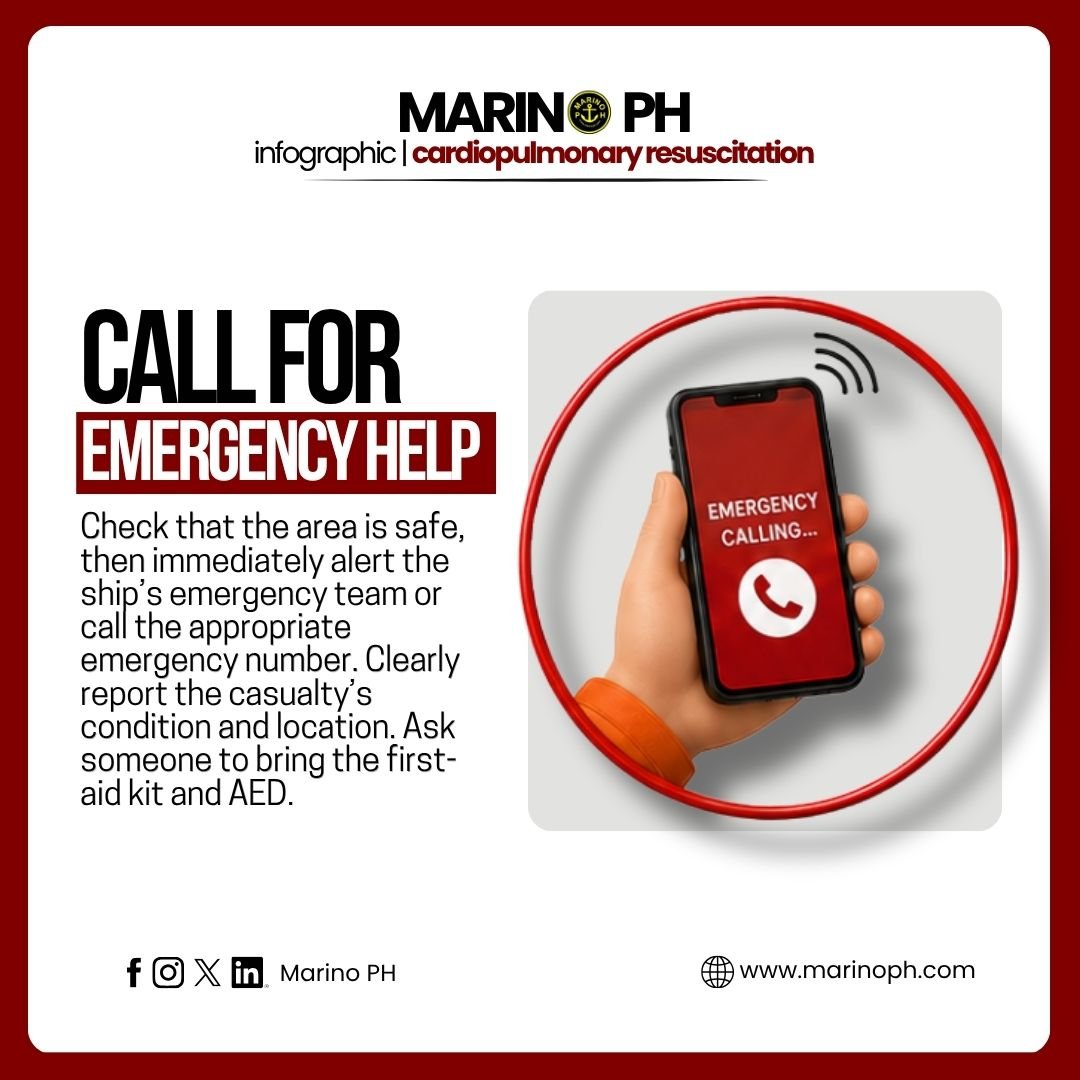
Call for Emergency Help
Check that the area is safe, then immediately alert the ship’s emergency team or call the appropriate emergency number. Clearly report the casualty’s condition and location. Ask someone to bring the first-aid kit and AED.
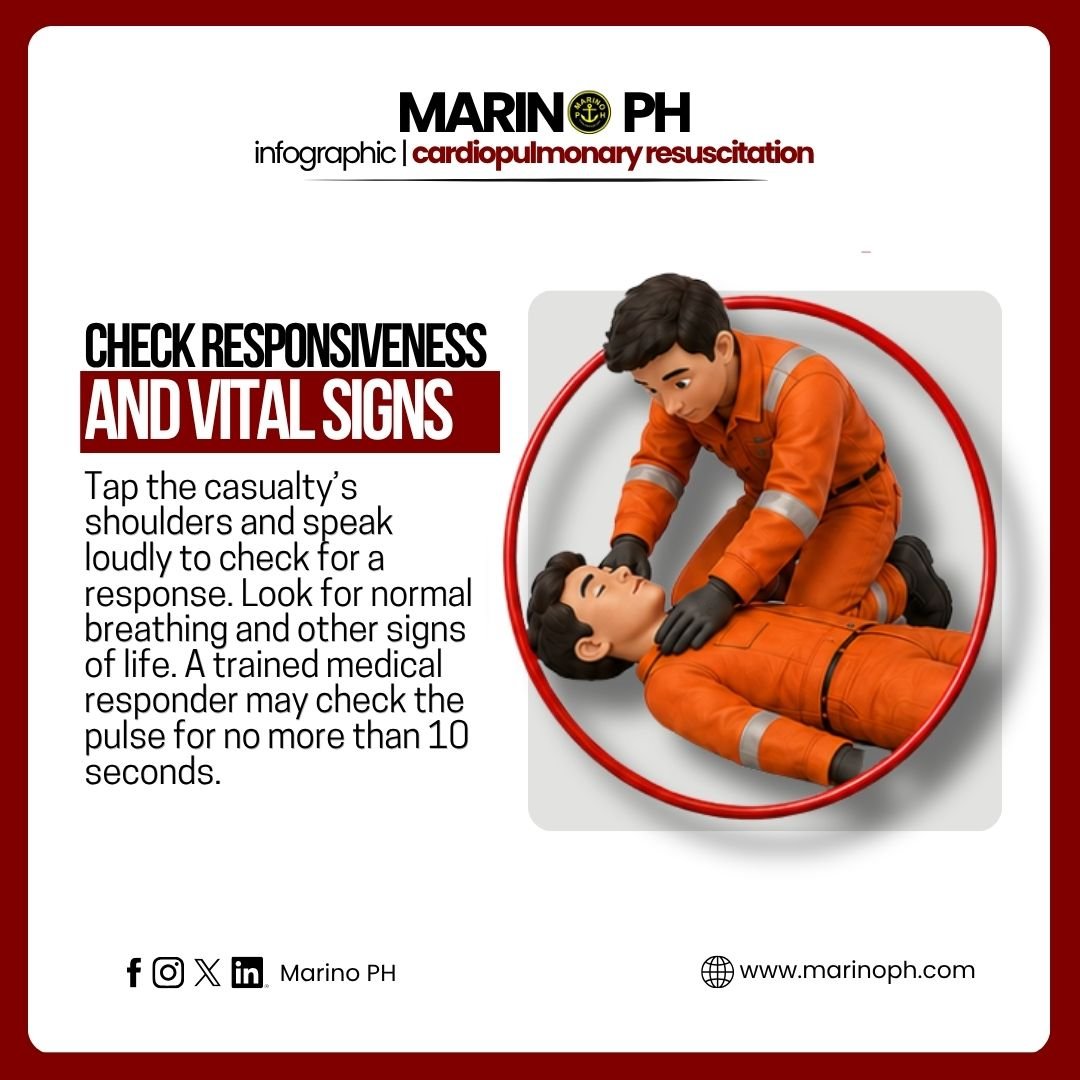
Check Responsiveness and Vital Signs
Tap the casualty’s shoulders and speak loudly to check for a response. Look for normal breathing and other signs of life. A trained medical responder may check the pulse for no more than 10 seconds.
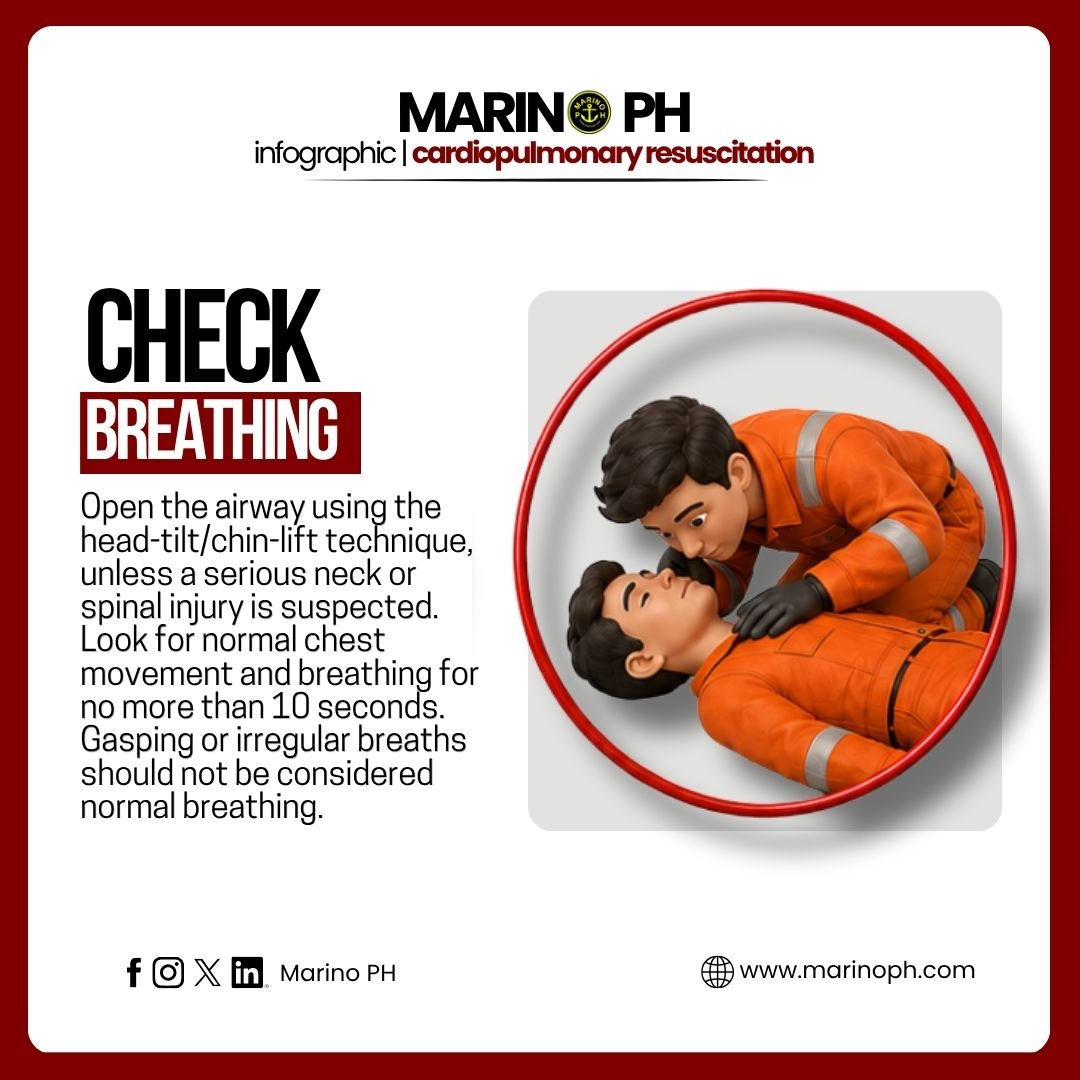
Check Breathing
Open the airway using the head-tilt/chin-lift technique, unless a serious neck or spinal injury is suspected.
Look for normal chest movement and breathing for no more than 10 seconds. Gasping or irregular breaths should not be considered normal breathing.
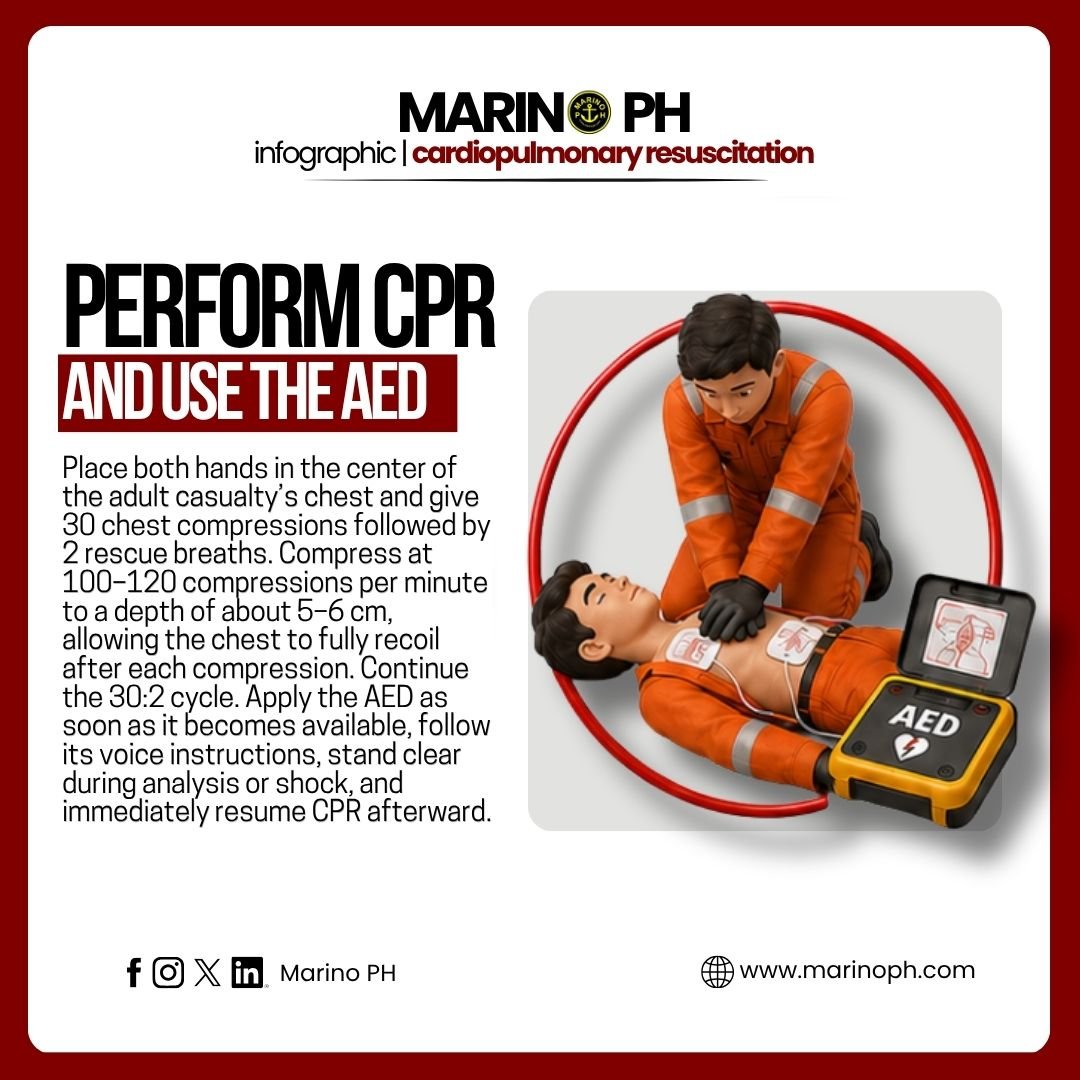
Perform CPR and Use the AED
Place both hands in the center of the adult casualty’s chest and give 30 chest compressions followed by 2 rescue breaths.

Compress at 100–120 compressions per minute to a depth of about 5–6 cm, allowing the chest to fully recoil after each compression.
Continue the 30:2 cycle.
Apply the AED as soon as it becomes available, follow its voice instructions, stand clear during analysis or shock, and immediately resume CPR afterward.
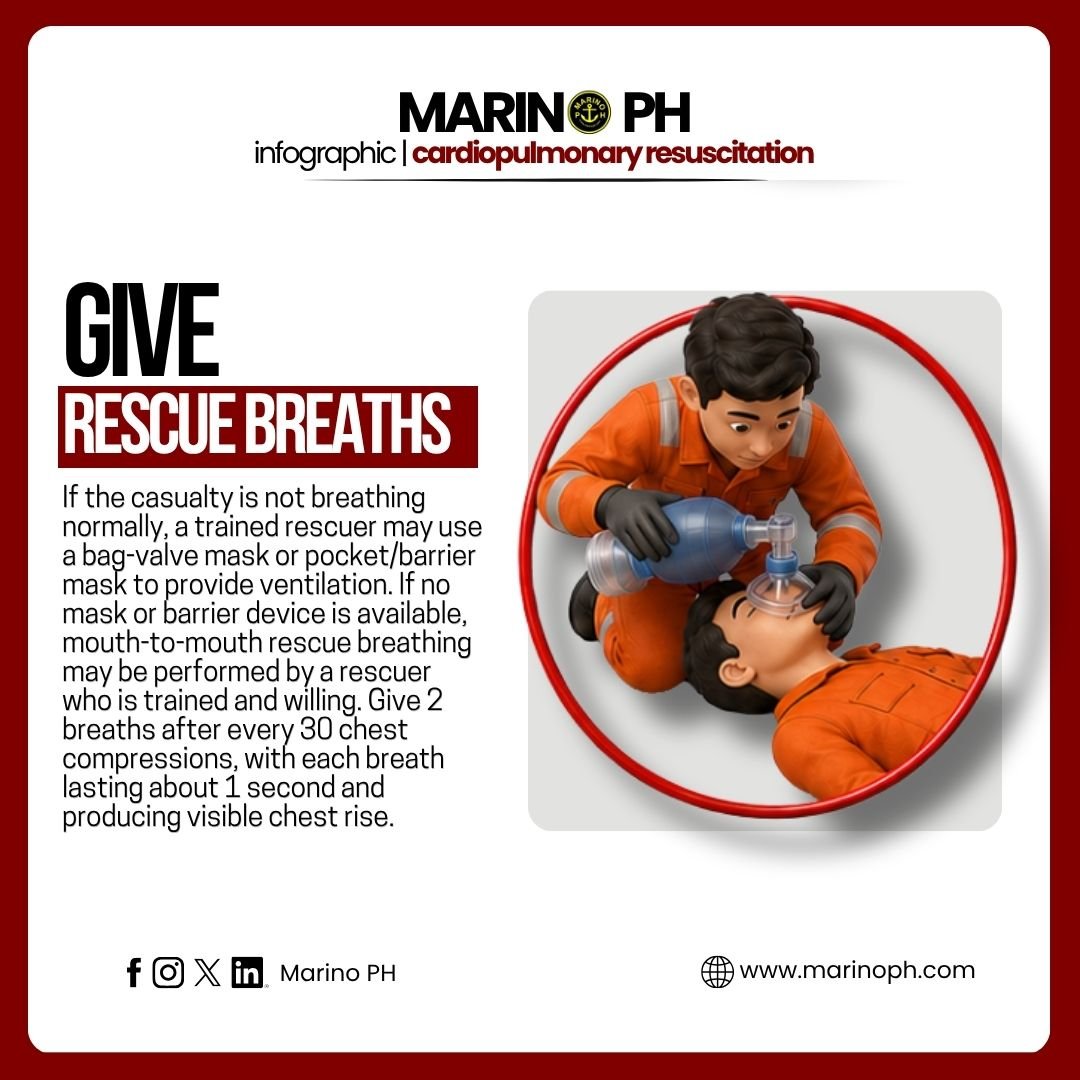
Give Rescue Breaths
If the casualty is not breathing normally, a trained rescuer may use a bag-valve mask or pocket/barrier mask to provide ventilation.
If no mask or barrier device is available, mouth-to-mouth rescue breathing may be performed by a rescuer who is trained and willing.
Give 2 breaths after every 30 chest compressions, with each breath lasting about 1 second and producing visible chest rise.
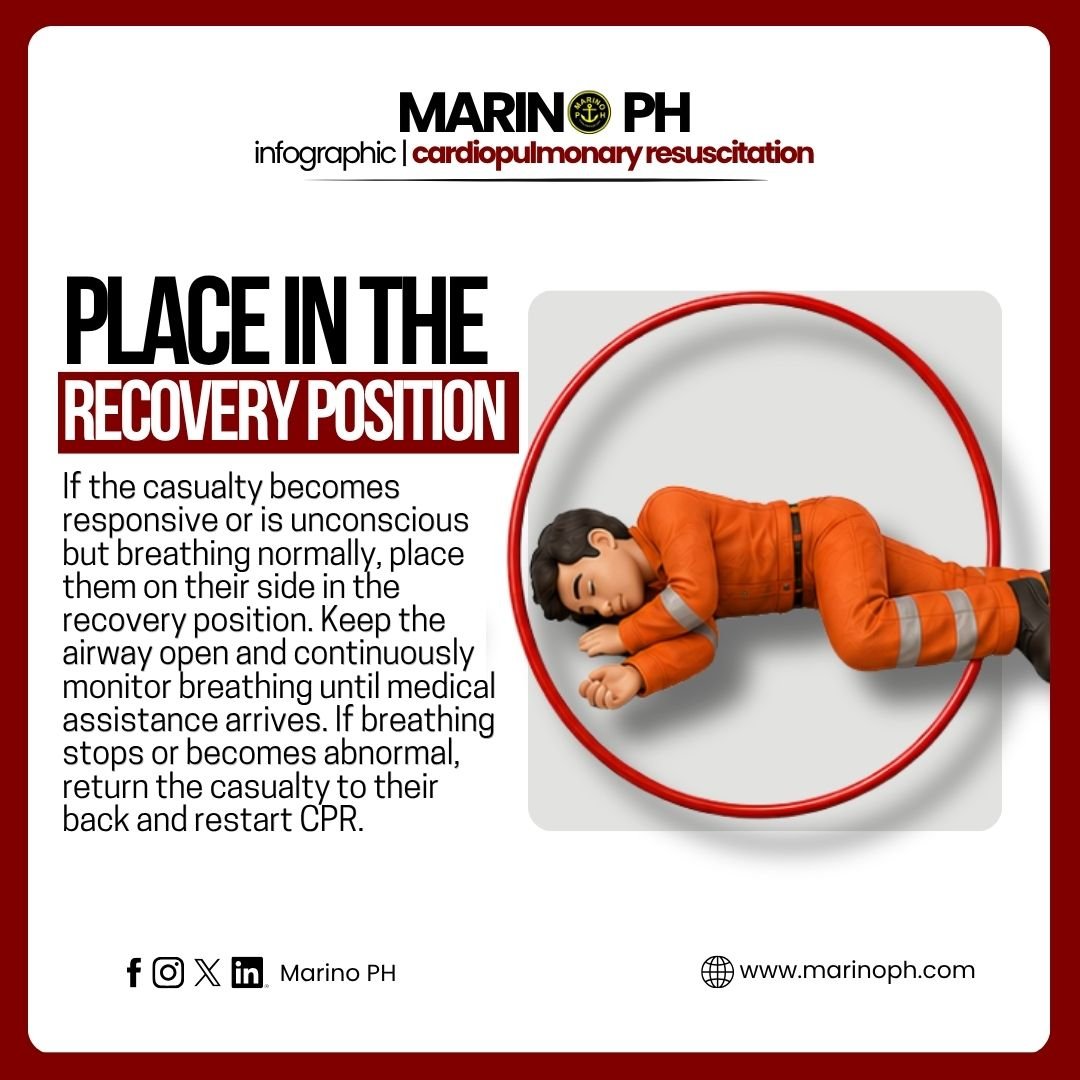
Place in the Recovery Position
If the casualty becomes responsive or is unconscious but breathing normally, place them on their side in the recovery position.
Keep the airway open and continuously monitor breathing until medical assistance arrives.
If breathing stops or becomes abnormal, return the casualty to their back and restart CPR.
